HR Interview Questions and Answers: Tell Me About Yourself, Strengths, Salary & Why Should We Hire You
Prepare winning answers to the 25 most common HR interview questions with templates, examples and salary negotiation scripts for freshers and experienced candidates.
Executive Overview & Industry Landscape
The HR round is not a formality. Recruiters use it to test communication, motivation, culture fit, stability and expectations, and they have the power to reject technically strong candidates. The questions are predictable, which is an advantage: with a small set of well-structured, honest and specific answers, you can handle almost every variation. The goal is to sound prepared yet natural, positive yet truthful, and always relevant to the role.
Core Methodology & Strategic Frameworks
The Present-Past-Future Introduction
A 60 to 90 second answer to "Tell me about yourself".
- Present: your current role or degree and one standout strength or achievement
- Past: two relevant experiences, projects or skills that led you here, with one quantified result
- Future: why this role and company are the logical next step and what you hope to contribute
- Avoid reciting your resume line by line or sharing unrelated personal details
The Honest-Strength Proof Pattern
Answering strengths, weaknesses and "why should we hire you".
- Strength: choose 2 relevant strengths and prove each with a short example and a result
- Weakness: pick a real, non-critical weakness, show the steps you are taking and the progress so far
- Hire me: match the job description's top needs with your evidence and your motivation to learn
The Questions Every Candidate Faces
Model approaches to the most frequent HR questions.
Tell Me About Yourself (Fresher Example)
I recently completed my B.Tech in Computer Science, where I focused on web development and maintained an 8.2 CGPA. During my final-year project I built a hostel complaint management app with React and Node.js that is now used by 400 students, which taught me to gather requirements and ship iteratively. I also completed an internship where I fixed 25 bugs in a production dashboard. I am looking for a software engineering role where I can keep building user-facing products, and your focus on scalable web platforms is a great match for my skills.
Why Are You Leaving Your Current Job? / Career Gap Questions
Stay positive and forward-looking. Focus on growth, learning or scope rather than blaming a manager or company. For a career gap, state the reason briefly and honestly (health, family responsibilities, upskilling, exam preparation), then show what you did to stay current and why you are ready now. Never sound defensive.
- Good: "I have learned a lot in my current role and am now looking for broader ownership in a larger product team."
- Avoid: "My manager is terrible" or "The pay is too low".
Salary Expectations and Notice Period
Research the market range using job portals and peers before the interview. If asked early, you can say, "I am more focused on the right role and growth, and I expect compensation in line with market standards for this position. Could you share the budgeted range?" When you must give a number, provide a range anchored on the higher side of your research and justified by your skills. Be accurate about your notice period and mention flexibility, such as buy-out options, only if true.
Closing Strong: Questions to Ask the Interviewer
Your final impression often comes from the questions you ask.
Smart Questions That Show Interest
Ask about what success looks like in the first 90 days, the team structure and growth path, how performance is evaluated, and the biggest current challenge for the team. Avoid asking about leave policy or salary first in the very first conversation unless the interviewer raises it.
Real Interview Questions & Model Responses
Verbatim interview questions asked at top employers with structured thought frameworks and scoring criteria.
What is your biggest weakness?
- Choose a real but non-fatal weakness.
- Show the steps and the improvement.
Where do you see yourself in five years?
- Stay aligned with the company's growth path.
- Avoid saying you plan to leave for higher studies or another field.
Critical Mistakes That Cause Immediate Rejections
- ×Memorizing scripts word for word and sounding robotic.
- ×Speaking negatively about former employers, teachers or colleagues.
- ×Giving generic strengths like "hardworking" with no evidence.
- ×Stating a salary figure before understanding the role and budget.
- ×Having no questions to ask the interviewer.
Actionable 30-Day Preparation Checklist
- Write and rehearse a 90-second introduction and a 30-second version.
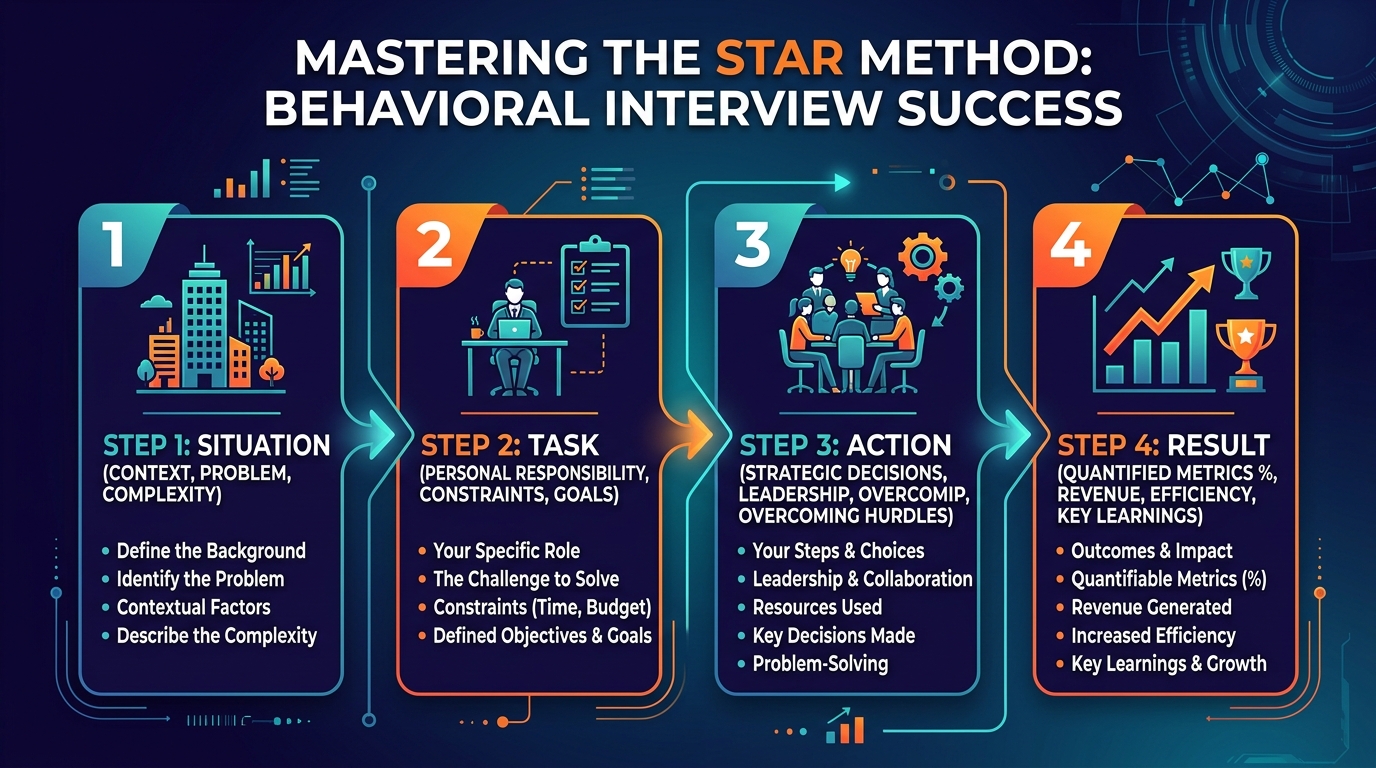
- Prepare examples for teamwork, conflict, failure and leadership in the STAR format.
- Research the company: products, recent news, values and competitors.
- Check market salary data and decide your range and walk-away point.
- Record yourself answering ten questions and review tone, pace and filler words.
- Prepare three thoughtful questions to ask the interviewer.
- Plan your attire, documents and route or video setup the night before.
Frequently Asked Questions
How do I answer "Tell me about yourself" in an HR interview?
Use a present, past, future structure in 60 to 90 seconds: who you are now, the relevant experience that shaped you, and why this role is your next step. Keep it professional and tailored to the job.
Should I disclose my current salary?
Be honest if you are asked directly, but you can first redirect to market range and the budget for the role. Never inflate your current salary, as offers can be verified.
How do I explain a career gap?
State the reason briefly and truthfully, highlight any learning or projects during the gap, and emphasize your readiness to commit now.