LATESTSSC CGL 2026 Notification Live | ISRO Scientist 'SC' Interview Shortlists Out | NIC Scientist B Active
InterviewJobs.in
Complete Career Lifecycle Knowledge Hub

Comprehensive Career Roadmaps & Interview Masterclasses

From algorithmic problem-solving patterns and high-level system design to consulting case frameworks, core engineering fundamentals, and central competitive exams—explore battle-tested roadmaps engineered for serious aspirants.

9 Clusters
Tech, Core & Exams
100% Free
Open Masterclasses
STAR-P & LLD
Real Answer Models
2026 Edition
Updated Guidelines
Showing 31 masterclass guides
Software Engineer Interview Preparation 2026: Complete Roadmap from Coding to System Design
#1Software Engineering & IT
24 min read
software engineer interview preparation

Software Engineer Interview Preparation 2026: Complete Roadmap from Coding to System Design

Cracking modern software engineering interviews in 2026 requires shifting away from mindless LeetCode memorization toward pattern recognition, robust architectural trade-off analysis, deep CS fundamentals, and structured behavioral storytelling. This exhaustive roadmap provides a battle-tested 90-day execution framework for landing SDE-1 and SDE-2 roles across top product ecosystems.

The 7-stage software engineer interview loop and how top tech panels score each round.
The 15 algorithmic problem-solving patterns that solve over 85% of coding interview challenges.
Data Structures and Algorithms Interview Guide: Topics, Patterns & Practice Roadmap
#2Software Engineering & IT
26 min read
DSA interview preparation

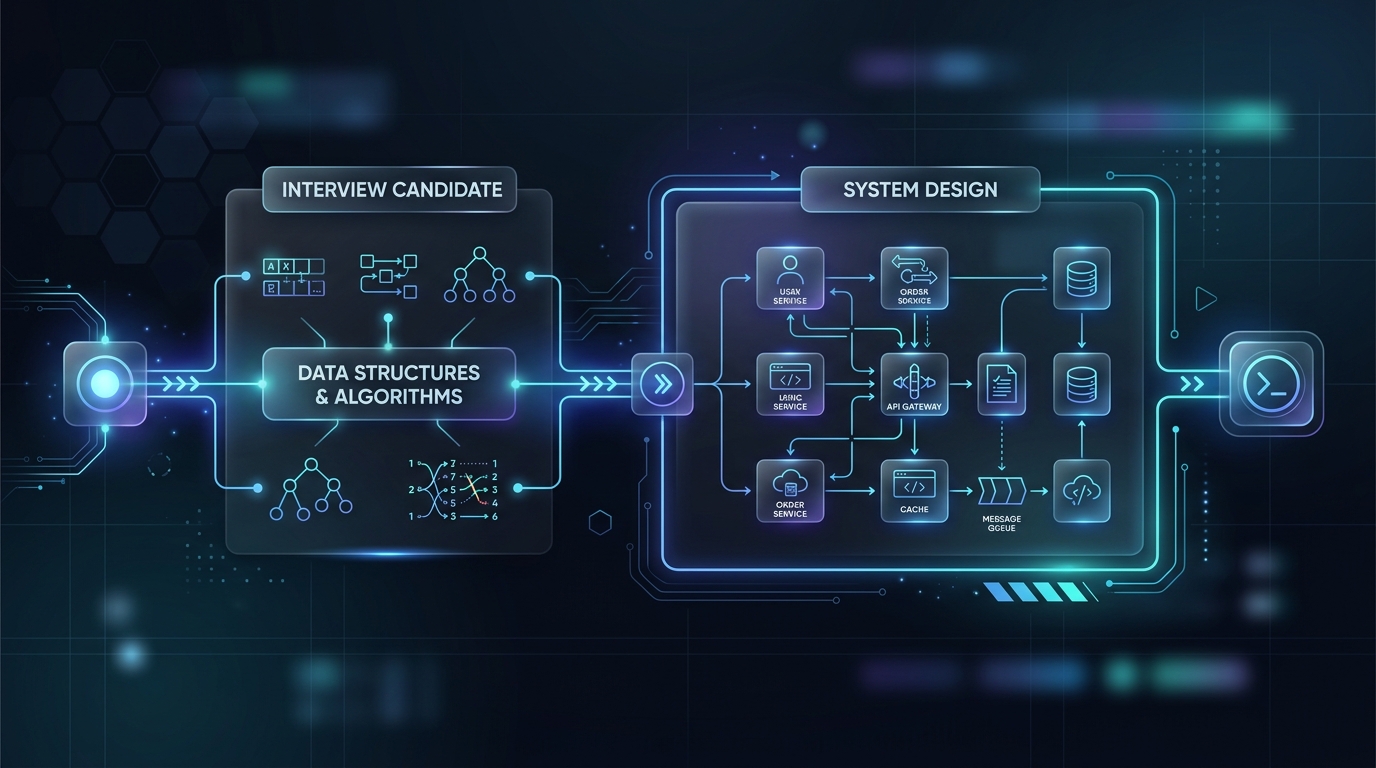
Data Structures and Algorithms Interview Guide: Topics, Patterns & Practice Roadmap

Succeeding in technical coding interviews requires abandoning brute-force question memorization in favor of algorithmic pattern mastery. This exhaustive guide provides an end-to-end curriculum across all foundational and advanced data structures, mapping them directly to 17 recurring problem-solving patterns with rigorous time and space complexity analysis.

Master all essential data structures: Arrays, Strings, Linked Lists, Stacks, Queues, Hash Maps, Heaps, Trees, and Graphs.
The 17 high-frequency algorithmic patterns: Two Pointers, Sliding Window, Fast & Slow, Monotonic Stack, Top-K, Backtracking, and DP.
System Design Interview Guide: Complete Preparation Roadmap with Real Examples
#3Software Engineering & IT
28 min read
system design interview preparation

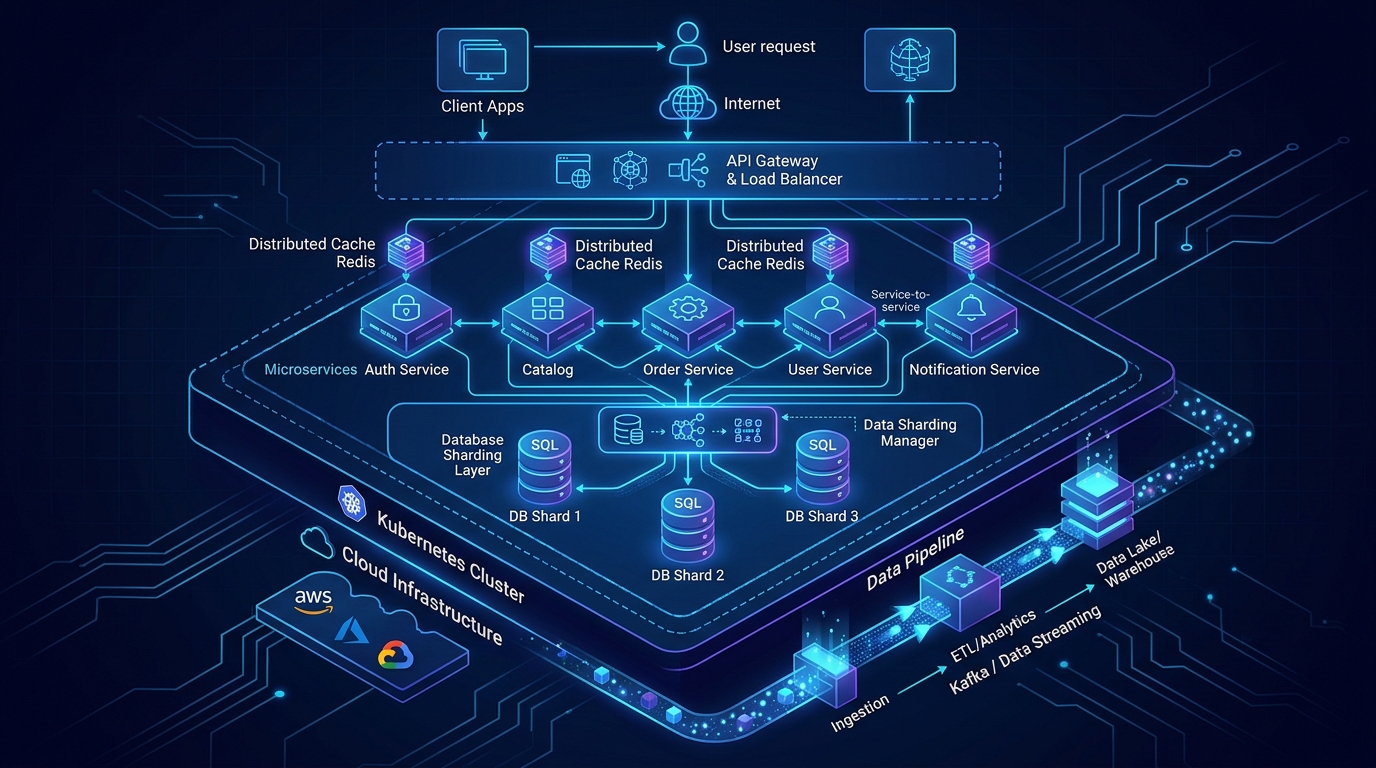
System Design Interview Guide: Complete Preparation Roadmap with Real Examples

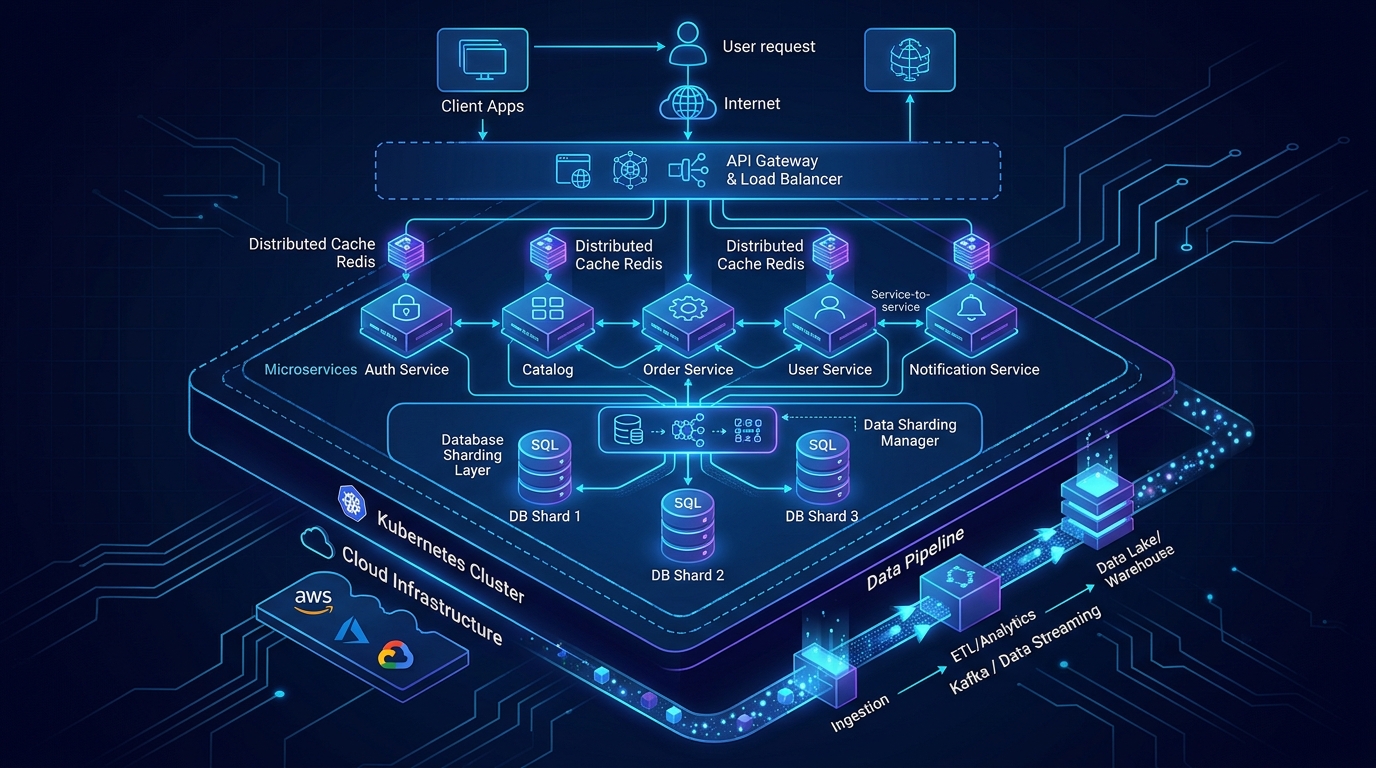
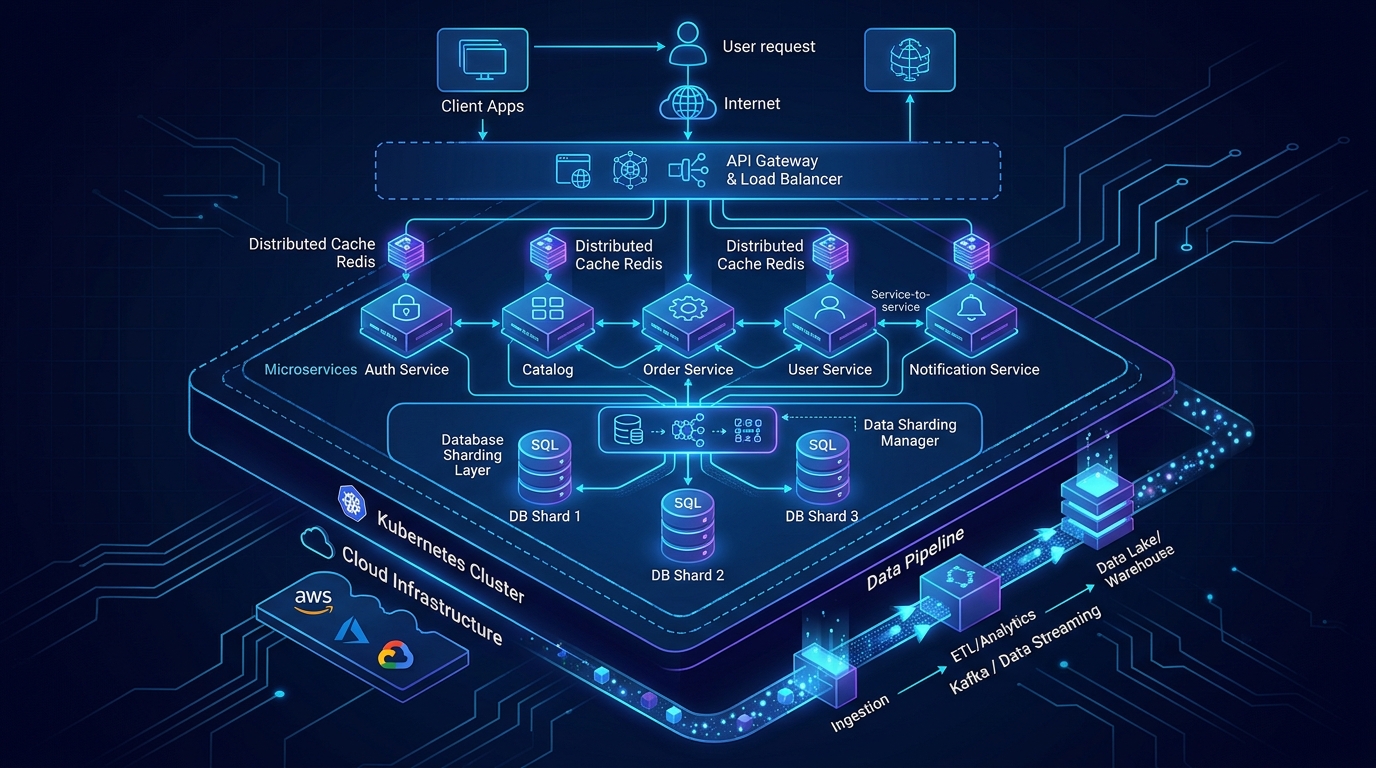
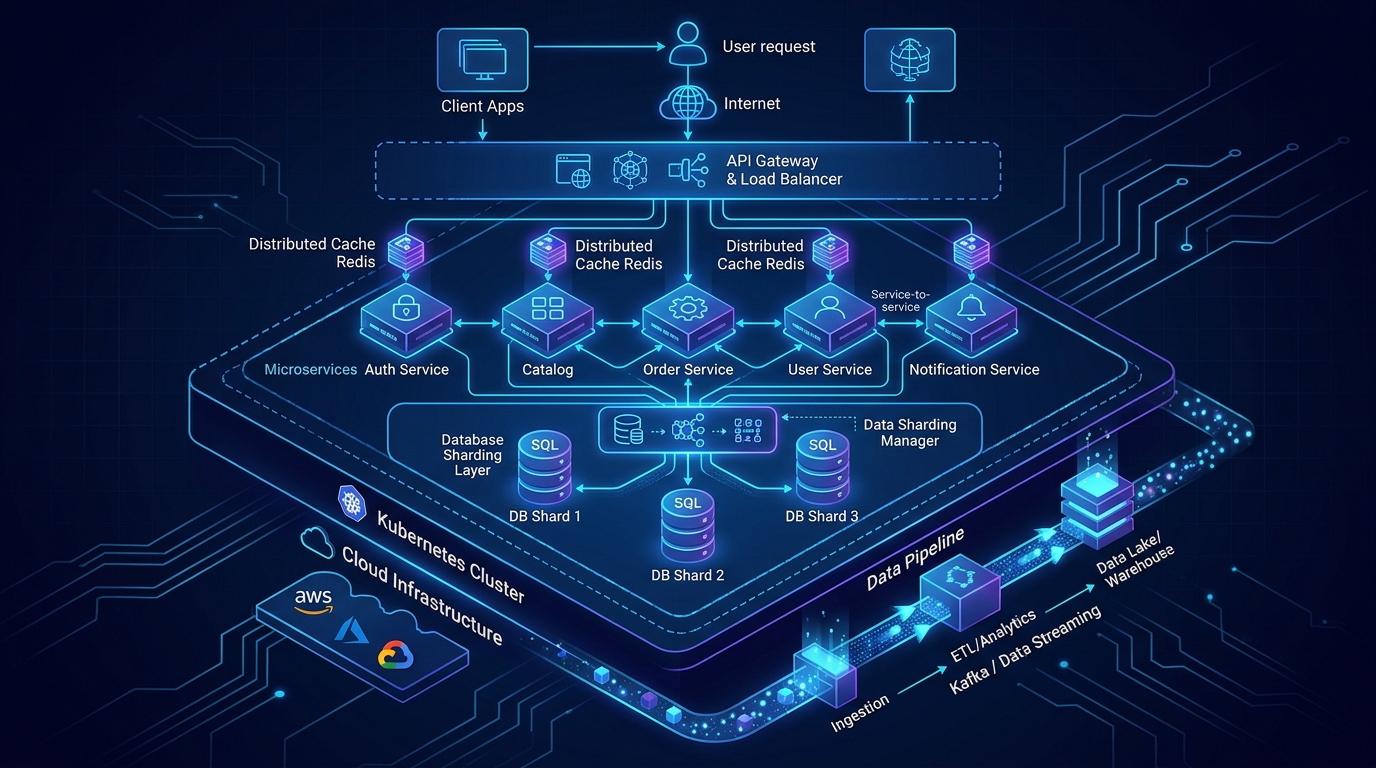
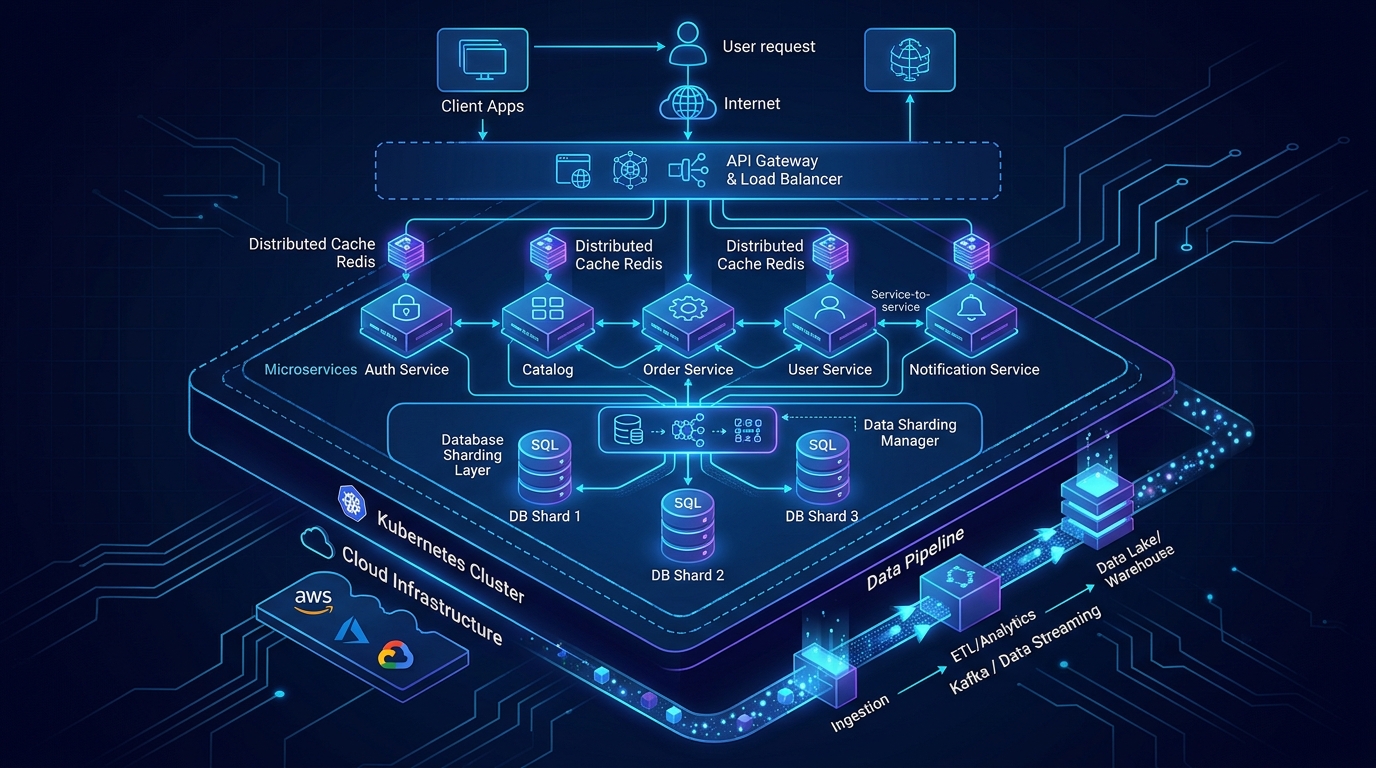
System design interviews evaluate your ability to construct scalable, fault-tolerant, and performant software architectures under real-world constraints. This comprehensive guide covers core distributed building blocks, the disciplined 6-step HLD framework, back-of-the-envelope capacity planning, and complete end-to-end design architectures for distributed systems.

The 4 core non-functional metrics: Scalability, Availability (99.99%), Reliability, and Latency vs Throughput.
Distributed building blocks: Reverse proxies, Layer 4 vs Layer 7 load balancers, CDN edge caching, and API gateways.
Computer Science Fundamentals for Technical Interviews: OS, DBMS, Networks & OOP
#4Software Engineering & IT
25 min read
computer science interview preparation

Computer Science Fundamentals for Technical Interviews: OS, DBMS, Networks & OOP

Many candidates excel at coding puzzles but stumble when interviewers interrogate low-level computer science principles. This guide breaks down the four core pillars of computer science—Operating Systems, Database Management Systems, Computer Networks, and Object-Oriented Programming—explaining the engineering mechanics behind memory, transactions, network packets, and clean code.

Operating Systems: Processes vs Threads, Context Switching, CPU scheduling, and Virtual Memory paging.
Concurrency & Locks: Mutex vs Semaphore, race conditions, and resolving the 4 Coffman deadlock conditions.
Full Stack Developer Interview Questions & Preparation Guide
#5Software Engineering & IT
27 min read
full stack developer interview questions

Full Stack Developer Interview Questions & Preparation Guide

Modern full stack engineering in 2026 spans browser rendering pipelines, reactive component state, high-throughput microservices, stateless authentication, distributed caching, and zero-trust web security. This complete guide provides deep conceptual explanations, code snippets, architectural trade-offs, and high-frequency interview questions across the entire web stack.

Browser & JavaScript Engine Internals: Call stack, Microtask queue vs Macrotask queue, and the Event Loop.
Modern Frontend Engineering: Virtual DOM, React 19 / Server Components, hydration, and Core Web Vitals.
Data Analyst Interview Preparation: SQL, Excel, Statistics, BI & Case Questions
#6Data, AI & Emerging Tech
25 min read
data analyst interview preparation

Data Analyst Interview Preparation: SQL, Excel, Statistics, BI & Case Questions

In 2026, hiring managers look beyond basic SQL syntax and pivot tables; they evaluate structured problem-solving, root cause analysis, statistical rigor, and business acumen. This end-to-end roadmap provides an exhaustive guide to mastering advanced SQL window functions, spreadsheet modeling, executive dashboard design, metrics decomposition, and live case interviews.

Advanced SQL Mastery: Window functions (ROW_NUMBER, DENSE_RANK, LEAD/LAG), CTEs, self-joins, and query performance.
Spreadsheet & Modeling Acumen: XLOOKUP, INDEX/MATCH, dynamic arrays, sensitivity tables, and financial/business models.
Data Science Interview Guide: Statistics, Machine Learning, SQL & Case Studies
#7Data, AI & Emerging Tech
28 min read
data science interview preparation

Data Science Interview Guide: Statistics, Machine Learning, SQL & Case Studies

Data science interviews test a rigorous triad of theoretical mathematics, applied statistical inference, and business intuition. This masterclass guide equips you with deep conceptual mastery across probability distributions, machine learning algorithm trade-offs, metric selection (Precision vs Recall vs ROC-AUC), feature engineering pipelines, and real-world business case frameworks.

Probability & Applied Statistics: Bayes’ Theorem, Central Limit Theorem, probability distributions, and p-value inference.
Core ML Algorithms: Linear/Logistic regression mathematical derivations, SVMs, Decision Trees, Random Forests, and XGBoost.
AI & Machine Learning Engineer Interview Guide: Complete Preparation Roadmap
#8Data, AI & Emerging Tech
29 min read
machine learning engineer interview preparation

AI & Machine Learning Engineer Interview Guide: Complete Preparation Roadmap

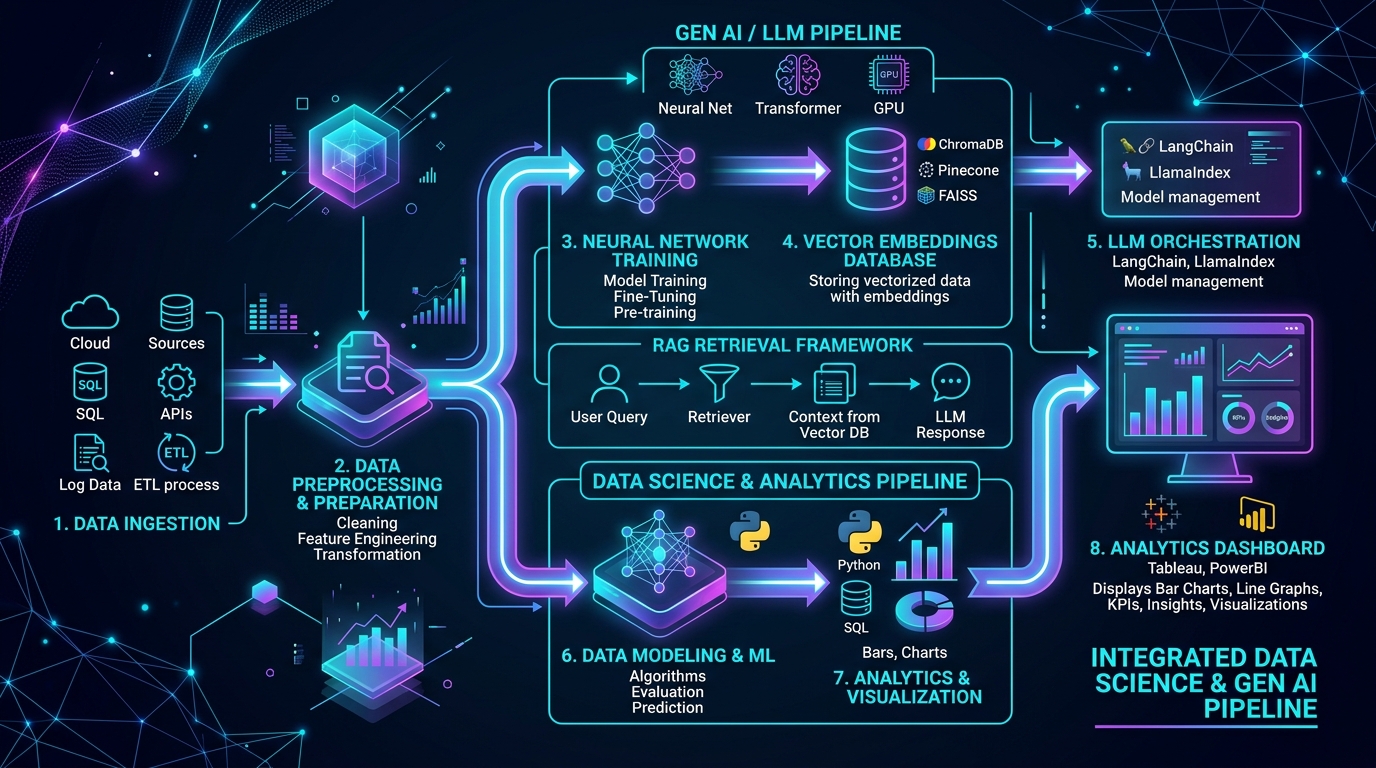
The role of the Machine Learning Engineer has undergone a massive evolution with the explosion of Generative AI, Large Language Models (LLMs), and production MLOps. In 2026, candidates must bridge the divide between theoretical deep learning mathematics and robust production engineering. This guide covers the complete spectrum from Transformer self-attention to production RAG pipelines, model quantization, and low-latency inference serving.

Deep Learning Fundamentals: Backpropagation, activation functions, vanishing/exploding gradients, and modern optimizers (AdamW).
Transformer Architecture Demystified: Multi-Head Self-Attention mathematical derivation, Positional Encodings (RoPE), and LayerNorm.
Cybersecurity Interview Preparation: Fundamentals, Questions & Career Roadmap
#9Data, AI & Emerging Tech
26 min read
cybersecurity interview questions

Cybersecurity Interview Preparation: Fundamentals, Questions & Career Roadmap

Cybersecurity is a mission-critical domain with severe global talent shortages. Technical interviews evaluate candidates on defensive architecture, secure communication protocols, threat modeling, SIEM log triage, and adherence to established frameworks like NIST and MITRE ATT&CK. This comprehensive guide equips you with structured technical answers and practical incident handling methodologies.

Core Security Principles: CIA Triad, Defense-in-Depth, Principle of Least Privilege, and Zero Trust tenets.
Network Security & Protocols: Firewalls (Stateful vs WAF), VPNs (IPsec vs WireGuard), IDS/IPS, and DNS security (DNSSEC).
Mechanical Engineering Interview Questions: Technical, HR & Fresher Preparation Guide
#10Core Engineering
26 min read
mechanical engineering interview questions

Mechanical Engineering Interview Questions: Technical, HR & Fresher Preparation Guide

Mechanical engineering interviews test core physical intuition, engineering drawings, material behaviors under stress, thermodynamic cycle efficiencies, and manufacturing feasibility. This guide provides an exhaustive preparation roadmap spanning Thermodynamics, Fluid Mechanics, Strength of Materials (SOM), Machine Design, GD&T, and structured answers for technical and HR interview rounds.

Thermodynamics & Heat Transfer: The 4 laws of thermodynamics, Carnot efficiency, Otto/Diesel/Rankine cycles, and conduction/convection/radiation.
Strength of Materials (SOM): Stress-strain curves, Hooke’s Law, Mohr’s Circle, bending equation, and failure theories (Von Mises vs Tresca).
Electrical Engineering Interview Questions & Complete Preparation Guide
#11Core Engineering
26 min read
electrical engineering interview questions

Electrical Engineering Interview Questions & Complete Preparation Guide

Electrical engineering interviews interrogate physical intuition across electromagnetic induction, rotating magnetic fields, symmetrical components in fault analysis, feedback stability, and power grid protection. This guide provides a rigorous preparation curriculum spanning Circuit Analysis, Electrical Machines, Power Grid Protection, Control Theory, and structured interview question models.

Circuit Theory & Network Theorems: Thevenin, Norton, Superposition, Maximum Power Transfer, and Transient RLC analysis.
Electrical Machines: Transformer equivalent circuit, open/short circuit tests, autotransformers, and induction motor torque-slip curves.
Civil Engineering Interview Questions: Site, Design & Fresher Preparation Guide
#12Core Engineering
26 min read
civil engineering interview questions

Civil Engineering Interview Questions: Site, Design & Fresher Preparation Guide

Civil engineering interviews assess candidate competence across both theoretical structural analysis and practical site execution challenges. Interviewers evaluate knowledge of IS codes (IS 456:2000, IS 800), concrete mix design, soil bearing capacity tests, bar bending schedules, surveying instruments, and site safety protocols.

Concrete Technology: Water-cement ratio (Abrams’ law), workability (slump test), curing methods, and concrete mix design grades (M20, M25, M30).
Reinforced Concrete Design (IS 456:2000): Limit State Method (LSM) vs Working Stress Method (WSM), under-reinforced vs over-reinforced beams.
Electronics & Communication Engineering Interview Questions and Preparation Guide
#13Core Engineering
26 min read
ECE interview questions

Electronics & Communication Engineering Interview Questions and Preparation Guide

Electronics & Communication Engineering interviews span a broad spectrum: from discrete analog transistor biasing and operational amplifiers to digital logic gates, Nyquist sampling, modern wireless modulation, and embedded C firmware. This comprehensive guide equips ECE freshers and professionals with structured conceptual answers across all core disciplines.

Analog Electronics: BJT vs MOSFET operating regions, Small-Signal analysis, ideal Op-Amp golden rules, and negative feedback configurations.
Digital Electronics: Boolean algebra, Karnaugh Maps (K-maps), setup and hold times in flip-flops, and static CMOS inverter design.
Finance Interview Questions & Preparation Guide for Freshers and Professionals
#14Finance, Accounting & Banking
26 min read
finance interview questions

Finance Interview Questions & Preparation Guide for Freshers and Professionals

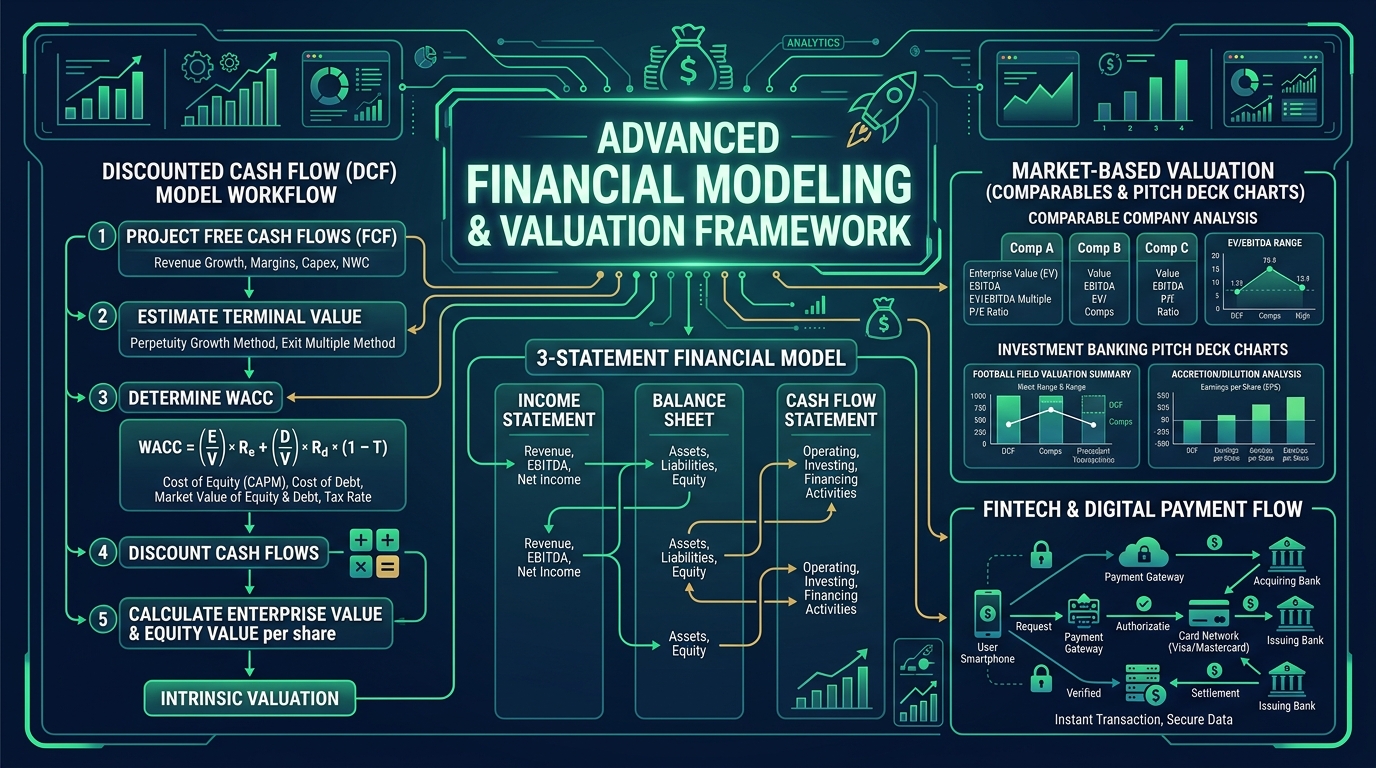
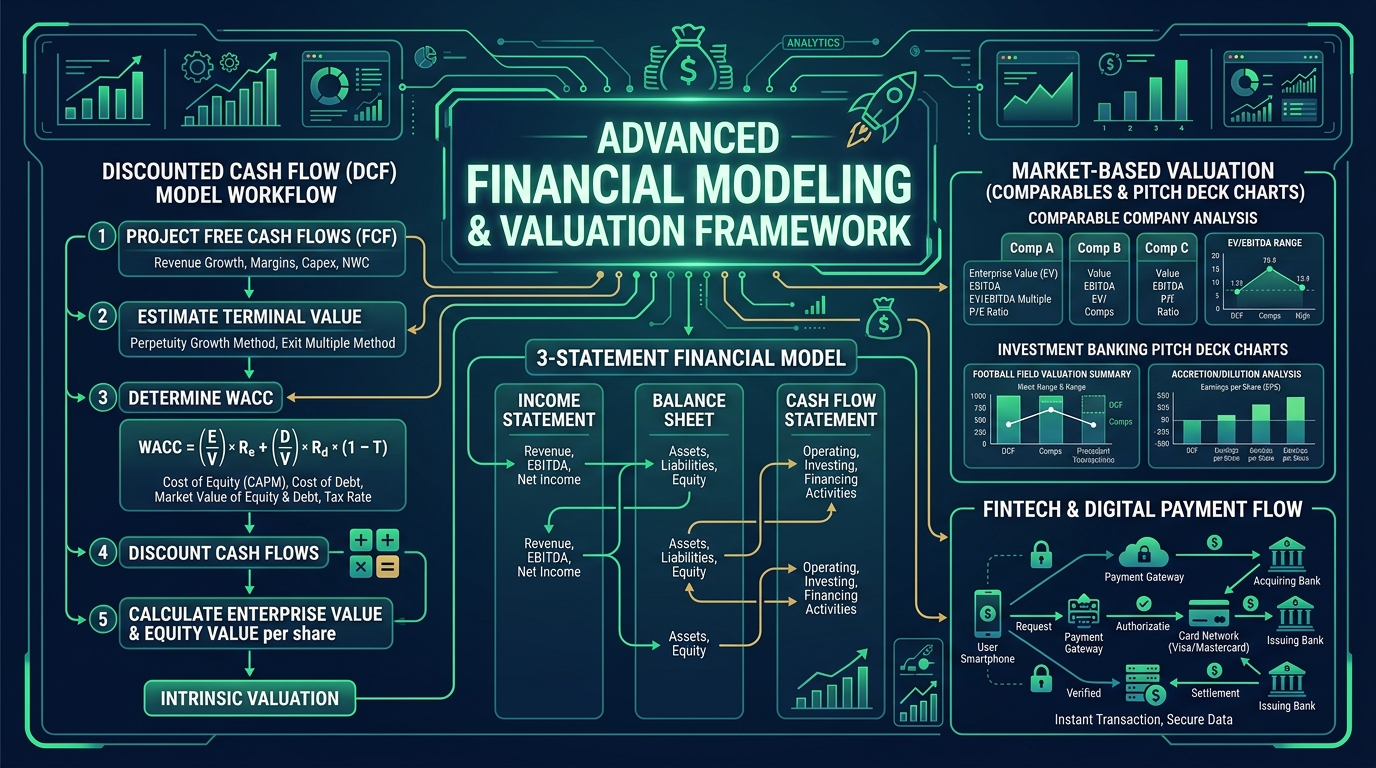
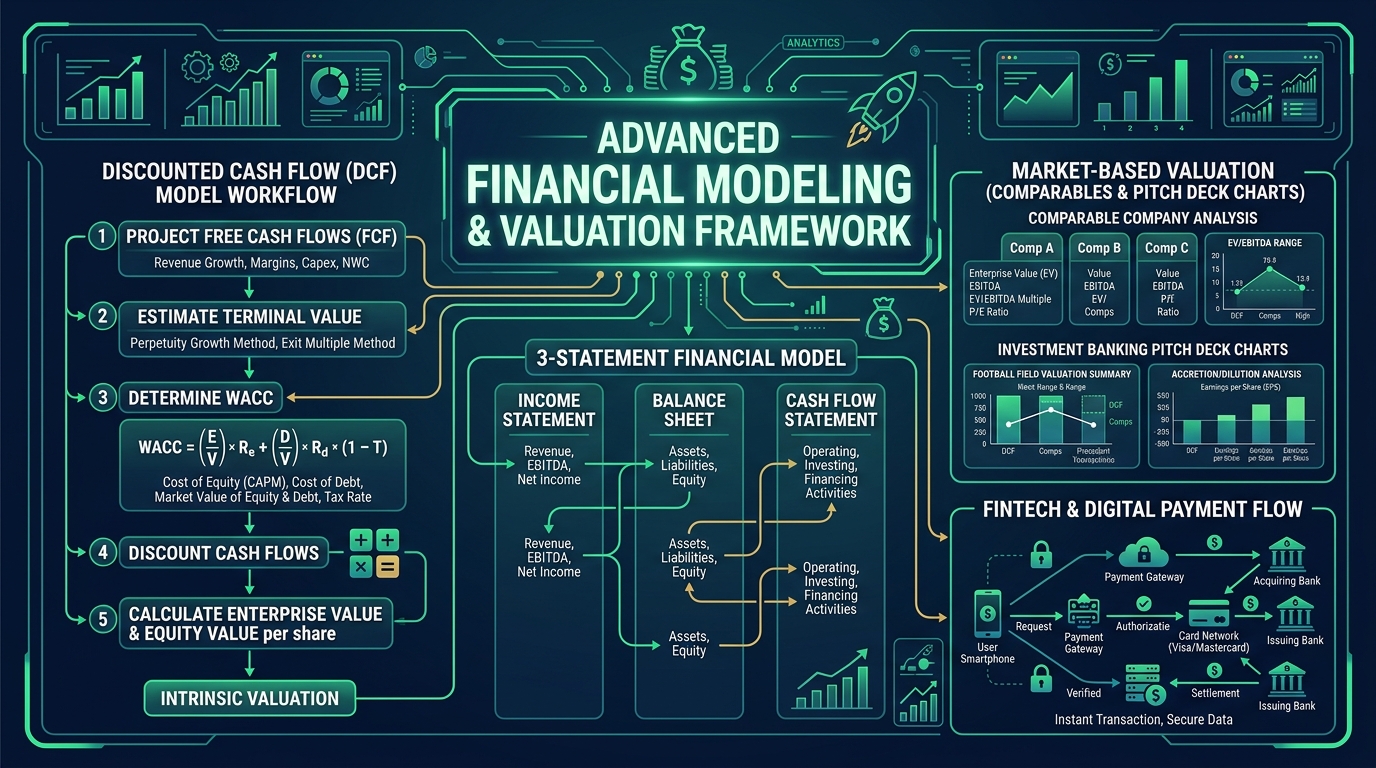
Finance interviews demand analytical precision, instant recall of 3-statement linkages, and a solid understanding of valuation methodologies. This masterclass covers the full spectrum from financial statement analysis and working capital cycles to Discounted Cash Flow (DCF) modeling, WACC formulas, enterprise value versus equity value, and M&A logic.

The 3 Financial Statements: Income Statement, Balance Sheet, and Cash Flow Statement interconnected mechanics.
Valuation Methodologies: Intrinsic (DCF) vs Relative (Comparable Companies, Precedent Transactions).
Accounting Interview Questions: Complete Guide from Basics to Advanced Concepts
#15Finance, Accounting & Banking
25 min read
accounting interview questions

Accounting Interview Questions: Complete Guide from Basics to Advanced Concepts

Accounting interviews evaluate fundamental command over the golden rules of double-entry bookkeeping, adjusting accruals, depreciation schedules, revenue recognition standards, and balance sheet reconciliation. This guide equips candidates with clear principles, worked journal entries, and step-by-step accounting scenarios.

The 3 Golden Rules of Accounting: Real, Personal, and Nominal accounts with debit/credit mechanics.
The Complete Accounting Cycle: Source documents -> Journal entries -> General Ledger -> Trial Balance -> Financial Statements.
How to Prepare for Bank PO Exam: Complete 6-Month Master Strategy (SBI & IBPS PO)
#16Finance, Accounting & Banking
24 min read
Bank PO preparation

How to Prepare for Bank PO Exam: Complete 6-Month Master Strategy (SBI & IBPS PO)

The Probationary Officer (PO) recruitment conducted by SBI and IBPS is India’s benchmark managerial competition in public sector banking. Selection requires a dual mastery: lightning-fast calculation in the 60-minute Prelims screening, and deep analytical problem-solving in the 3.5-hour Mains examination. This definitive guide delivers a phased 6-month roadmap, sectional breakdowns, descriptive writing models, and banking interview frameworks.

The 3-Tier Bank PO Selection Engine: Prelims screening, Mains analytical gauntlet, and Interview/GD dynamics.
Speed Math & Prelims Quant: Vedic math, digital sum, approximation, and quadratic equation shortcuts for 30+ marks in 20 minutes.
How to Prepare for RBI Grade B Officer Exam: Complete Phase I & II Master Strategy
#17Finance, Accounting & Banking
26 min read
RBI Grade B preparation

How to Prepare for RBI Grade B Officer Exam: Complete Phase I & II Master Strategy

The Reserve Bank of India (RBI) Grade B (General) Officer recruitment is the gold standard of public service in the Indian financial sector. Unlike commercial bank PO exams that focus on operational retail banking, RBI Grade B requires macro-economic analysis, policy critique, financial management theories, and high-velocity keyboard descriptive writing. This guide details a holistic 9-month preparation blueprint across Phase 1, Phase 2, and the Final Board Interview.

The 3-Phase RBI Evaluation Framework: 200-mark Phase 1 cutoff filtering, 300-mark Phase 2 descriptive gauntlet, and the 75-mark interview.
Phase 1 General Awareness Strategy: Mastering 80 marks of financial news, PIB releases, RBI reports, and global summits in 25 minutes.
MBA Personal Interview & SOP Preparation Guide: IIMs, Top B-Schools & Corporate GDs
#18Management, MBA & Consulting
25 min read
MBA interview preparation

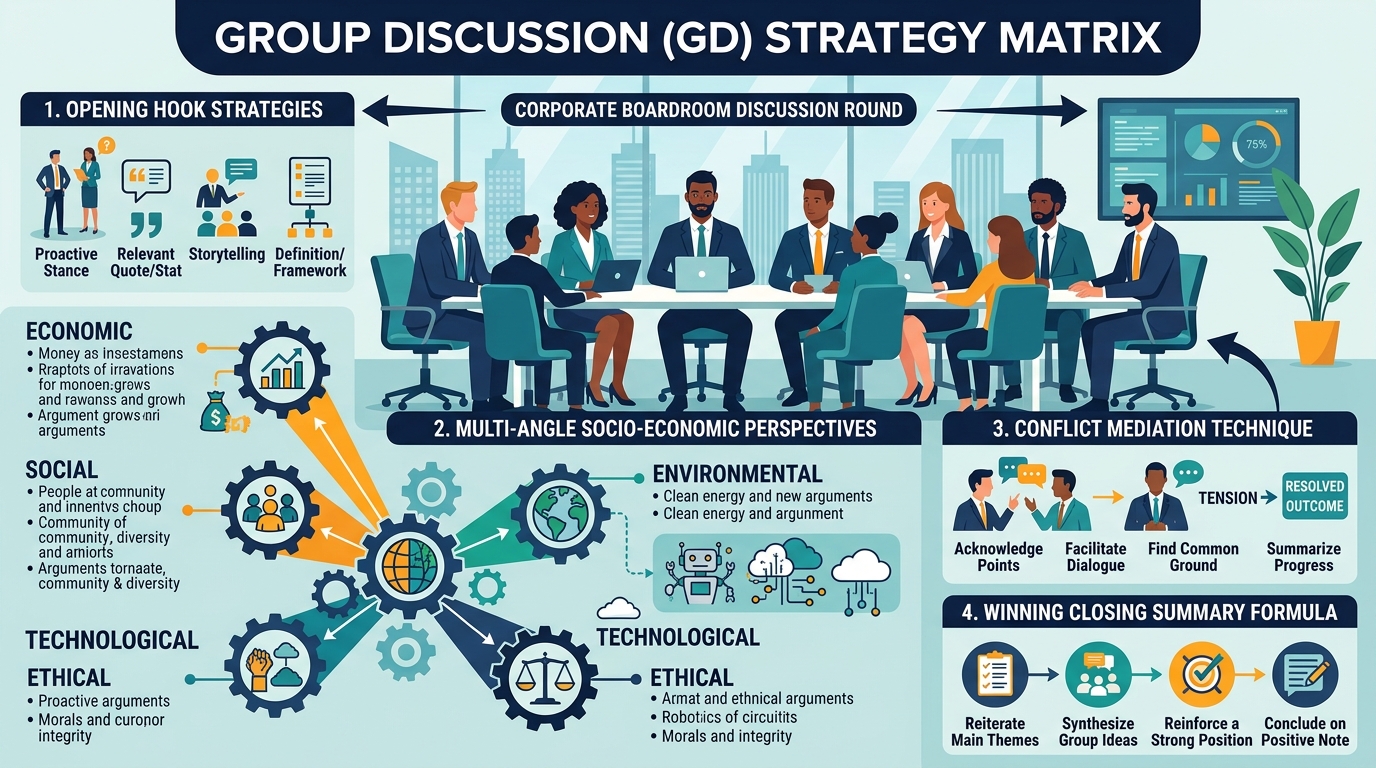
MBA Personal Interview & SOP Preparation Guide: IIMs, Top B-Schools & Corporate GDs

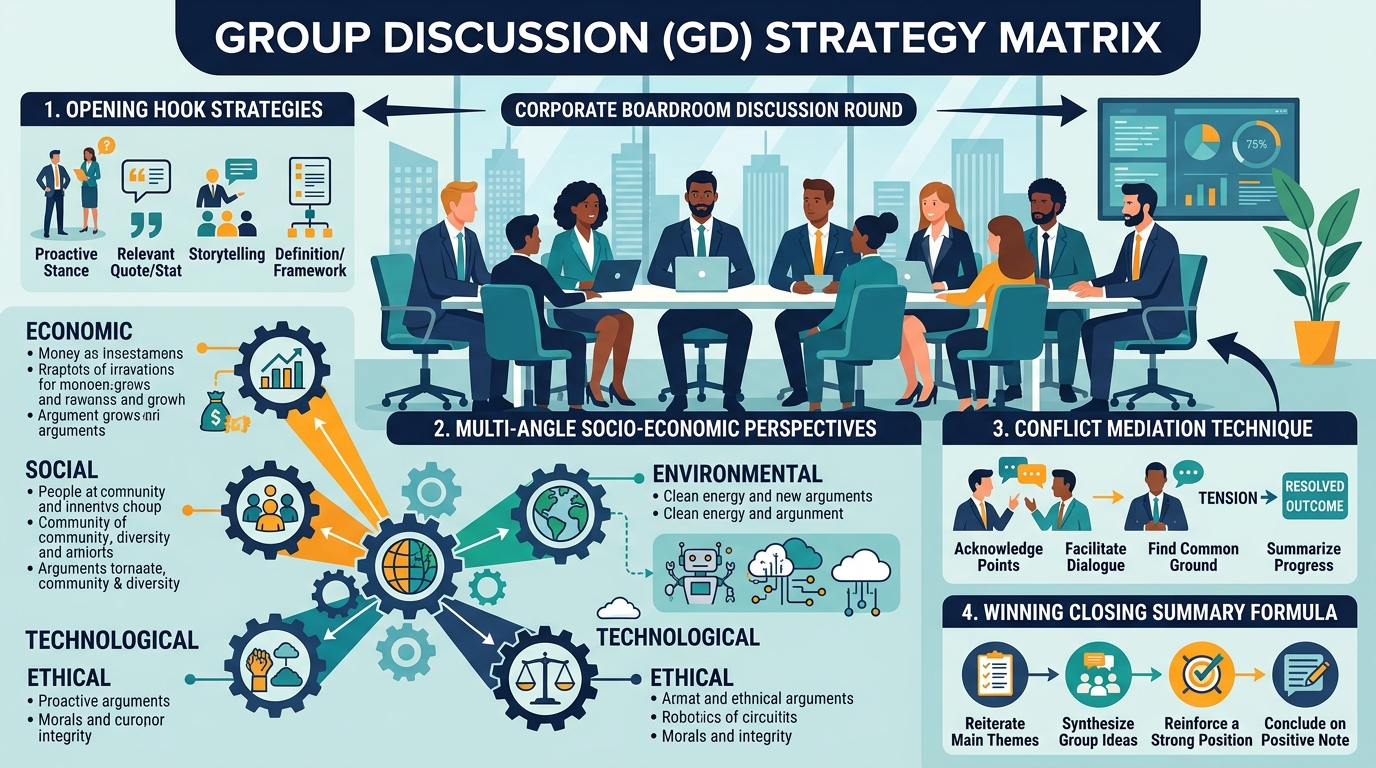
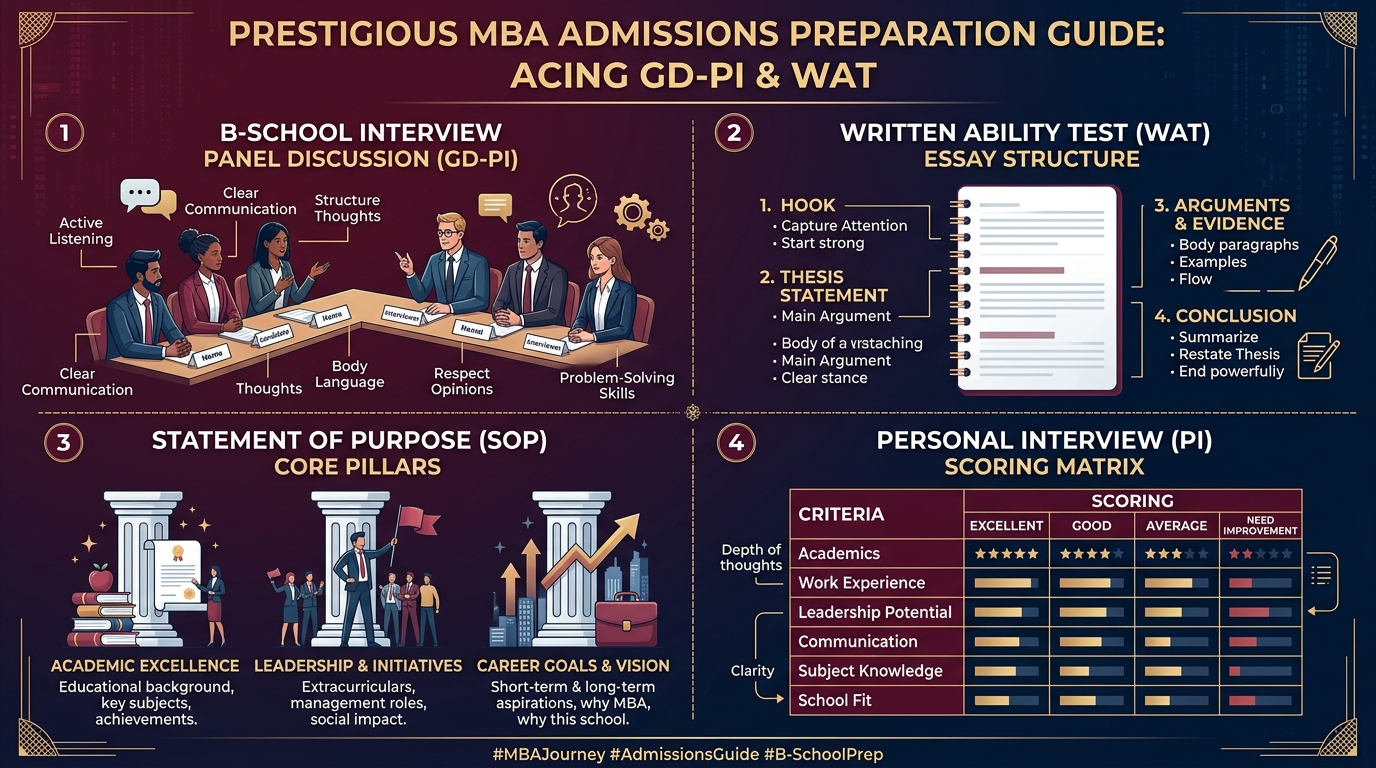
Scoring a 99th percentile in CAT or a 730+ in GMAT only earns you an invitation to the arena; your final admission into premier B-schools (IIM Ahmedabad, Bangalore, Calcutta, ISB, XLRI, FMS) is decided by the Written Ability Test (WAT) and Personal Interview (PI). Business school interview panels do not look for memorized answers; they evaluate intellectual clarity, self-awareness, leadership potential, ethics, and your capacity to contribute to peer learning. This guide covers SOP architecture, WAT frameworks, core interview defenses, and stress interview handling.

The B-School Selection Pipeline: Shortlisting algorithms, composite score formulas, and interview panel psychology.
Winning Statement of Purpose (SOP): Hook, career progression narrative, skill gap identification, and school-specific alignment.
Management Consulting Case Interview Preparation Guide: MBB Frameworks & Guesstimates
#19Management, MBA & Consulting
27 min read
consulting case interview preparation

Management Consulting Case Interview Preparation Guide: MBB Frameworks & Guesstimates

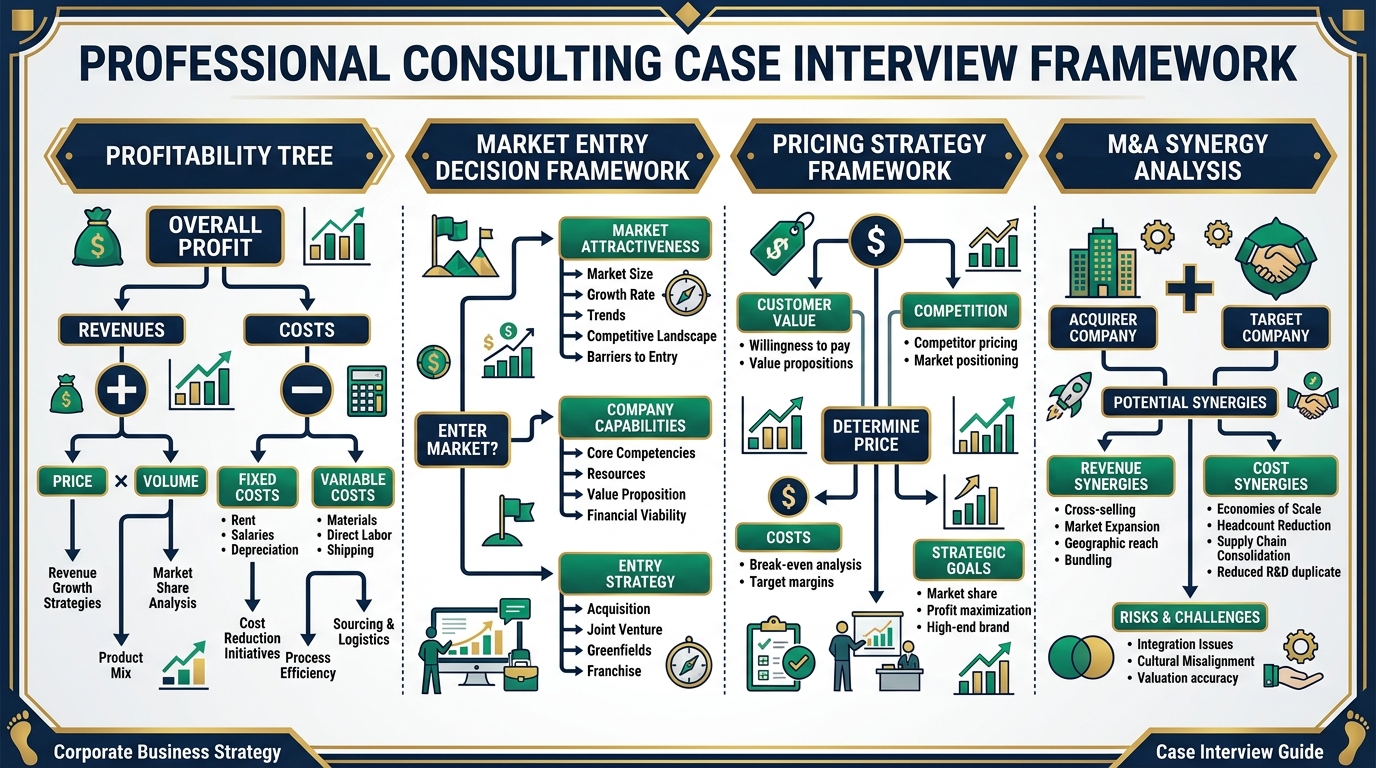
Management consulting interviews test how you think, not what you memorize. Top strategy firms (McKinsey & Company, Boston Consulting Group, Bain & Company, Kearney, Strategy&) simulate live business crises to evaluate your structured problem-solving, quantitative fluency, business acumen, and executive presence. This masterclass breaks down hypothesis-driven problem trees, the core case archetypes (Profitability, Market Entry, M&A, Pricing), top-down/bottom-up guesstimates, mental math techniques, and the critical Personal Experience Interview (PEI) fit round.

The 5-Step Consulting Case Architecture: Clarify & define objective -> Structure MECE tree -> Formulate hypothesis -> Analyze & crunch numbers -> Synthesize recommendation.
The MECE Principle (Mutually Exclusive, Collectively Exhaustive): How to construct issue trees that leave zero blind spots without overlapping.
Product Manager Interview Preparation Guide: Product Sense, Execution & Strategy
#20Management, MBA & Consulting
26 min read
product manager interview preparation

Product Manager Interview Preparation Guide: Product Sense, Execution & Strategy

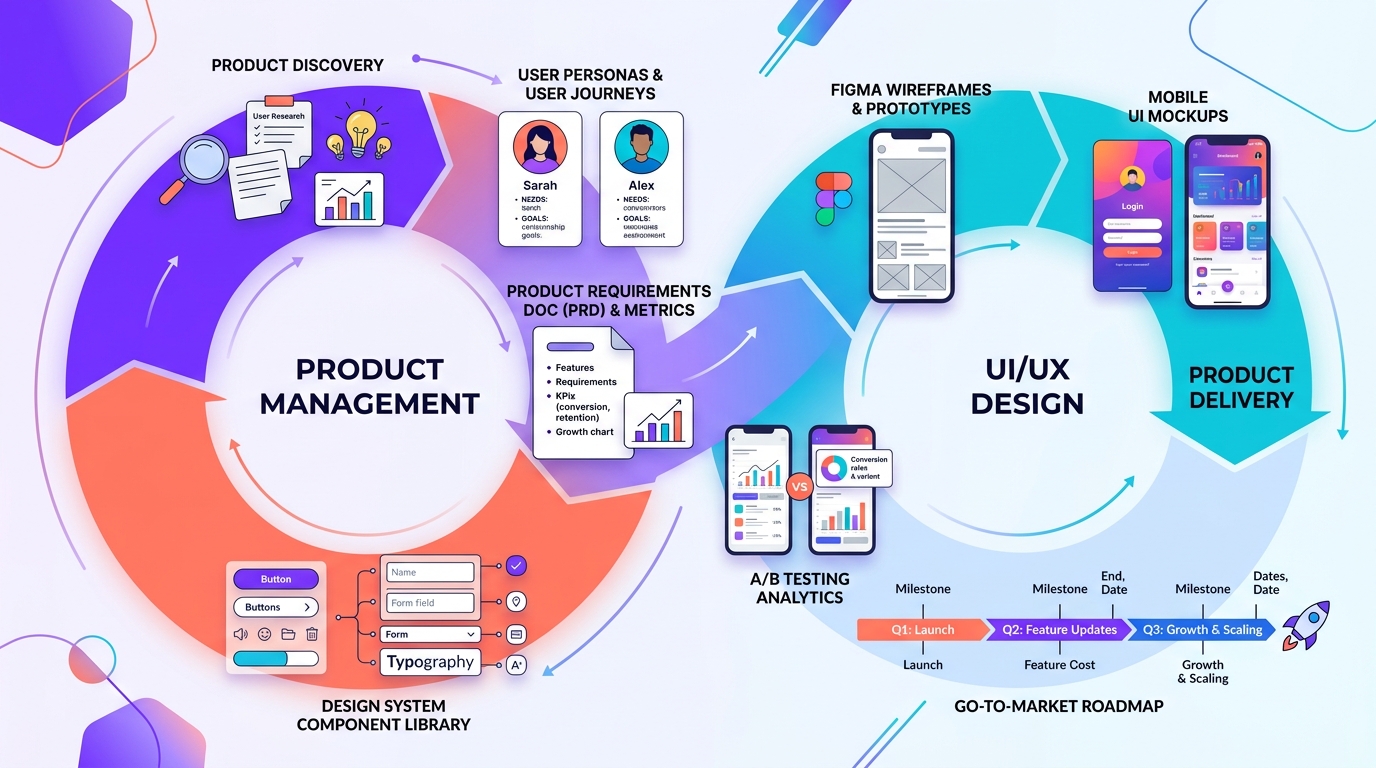
Product Management interviews evaluate your ability to operate at the intersection of business, technology, and user experience. Elite tech companies (Google, Meta, Microsoft, Amazon, Uber, Stripe) do not assess PMs on software coding or project management alone; they rigorously test user empathy, structured feature design, analytical metrics selection, root-cause execution under ambiguity, and cross-functional influence without authority. This guide delivers a complete operational blueprint covering the CIRCLES design method, the North Star metric hierarchy, diagnostic RCA trees, and senior PM behavioral frameworks.

The 4 PM Interview Pillars: Product Sense (Design), Product Execution (Metrics & RCA), Product Strategy, and Behavioral Leadership.
The CIRCLES Framework: Comprehend context -> Identify user personas -> Report user needs -> Cut & prioritize -> List creative solutions -> Evaluate trade-offs -> Summarize.
HR Interview Questions and Answers: Complete Preparation Guide for Freshers and Experienced
#21HR, Sales & Business Roles
25 min read
HR interview questions and answers

HR Interview Questions and Answers: Complete Preparation Guide for Freshers and Experienced

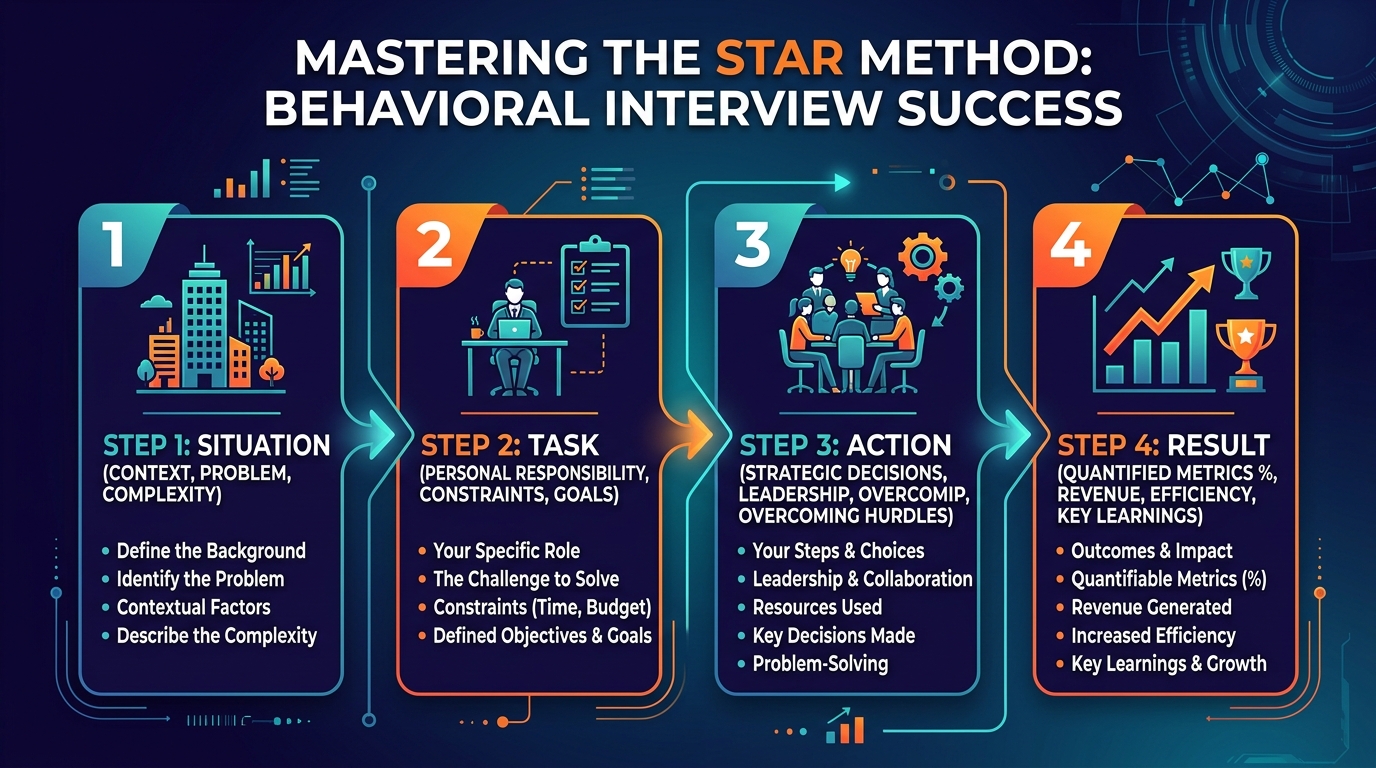
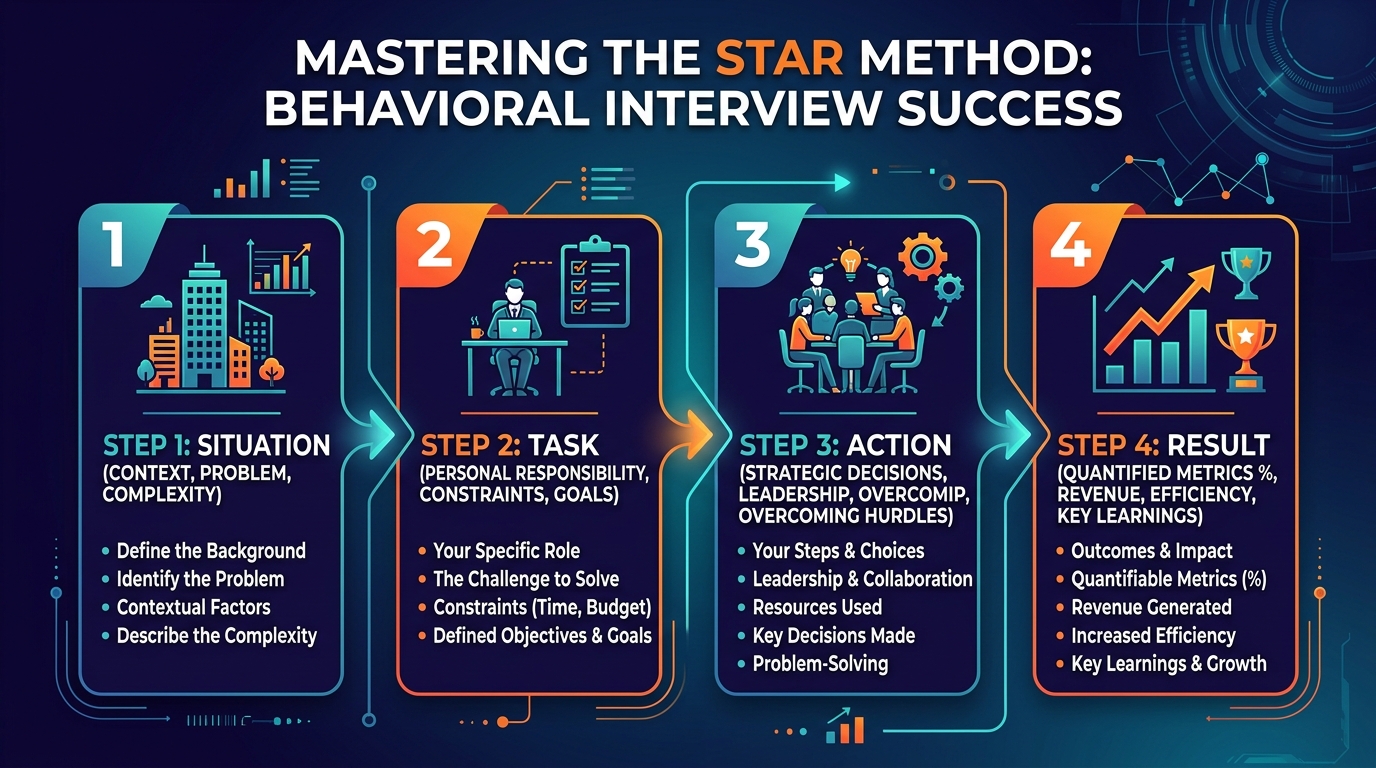
The HR round is often misunderstood as a routine formality, yet it accounts for a substantial percentage of final-stage candidate rejections. Human Resources leaders and talent acquisition managers do not assess technical syntax; they evaluate emotional intelligence (EQ), cultural alignment, reliability, integrity under pressure, salary expectations, and whether you will be an asset or a liability to the team dynamic. This definitive guide covers every universal HR question archetype, the STAR method, salary negotiation blueprints, and professional career gap narratives.

The Hidden HR Agenda: Why HR interviews exist, what recruiters red-flag, and how hiring decisions are finalized.
The STAR Technique Mastery: How to structure compelling behavioral stories (Situation, Task, Action, Result) in under 2 minutes.
B2B & B2C Sales Interview Questions & Answers: Inside Sales, SDR & Account Executive Guide
#22HR, Sales & Business Roles
26 min read
sales interview questions

B2B & B2C Sales Interview Questions & Answers: Inside Sales, SDR & Account Executive Guide

Sales interviews are uniquely practical: unlike many corporate roles, you cannot fake sales competence through textbook buzzwords. Hiring managers will evaluate you through live mock discovery calls, objection handling roleplays, and cold call simulations. Whether you are interviewing for an entry-level Sales Development Representative (SDR) or an Enterprise Account Executive (AE) managing million-dollar quotas, this guide breaks down the psychology of consultative selling, the MEDDPICC qualification methodology, and winning roleplay scripts.

The Modern Sales Archetype: Why consultative problem-solvers beat pushy feature-pitchers every single time.
Deconstructing "Sell Me This Pen": The legendary test decoded into diagnosis, pain discovery, scarcity, and consultative closing.
Digital Marketing Interview Questions and Answers: SEO, SEM, Paid Social & Growth Marketing
#23HR, Sales & Business Roles
26 min read
digital marketing interview questions

Digital Marketing Interview Questions and Answers: SEO, SEM, Paid Social & Growth Marketing

Modern digital marketing has transformed from creative vanity metrics (impressions, follower counts) into a quantitative, data-driven revenue engine. Hiring managers at top direct-to-consumer (D2C) brands, SaaS enterprises, and marketing agencies rigorously test your command over unit economics (CAC, LTV, ROAS, Payback Period), technical SEO architectures, bidding algorithms (Smart Bidding, Advantage+), creative fatigue mitigation, and multi-touch attribution models. This masterclass provides deep frameworks, formulas, diagnostic decision trees, and structured Q&A across the full marketing funnel.

The Modern Growth Marketing Stack: Organic (SEO, Content), Paid Performance (Search, Social), Lifecycle (Email, SMS), and CRO.
Unit Economics & Core Metrics: Calculating ROAS, CPA, CAC, LTV, Blended CAC, and the golden 3:1 LTV:CAC ratio.
Campus Placement Preparation: Complete Roadmap for Engineering & College Freshers
#24Campus Placement & Freshers
26 min read
campus placement preparation

Campus Placement Preparation: Complete Roadmap for Engineering & College Freshers

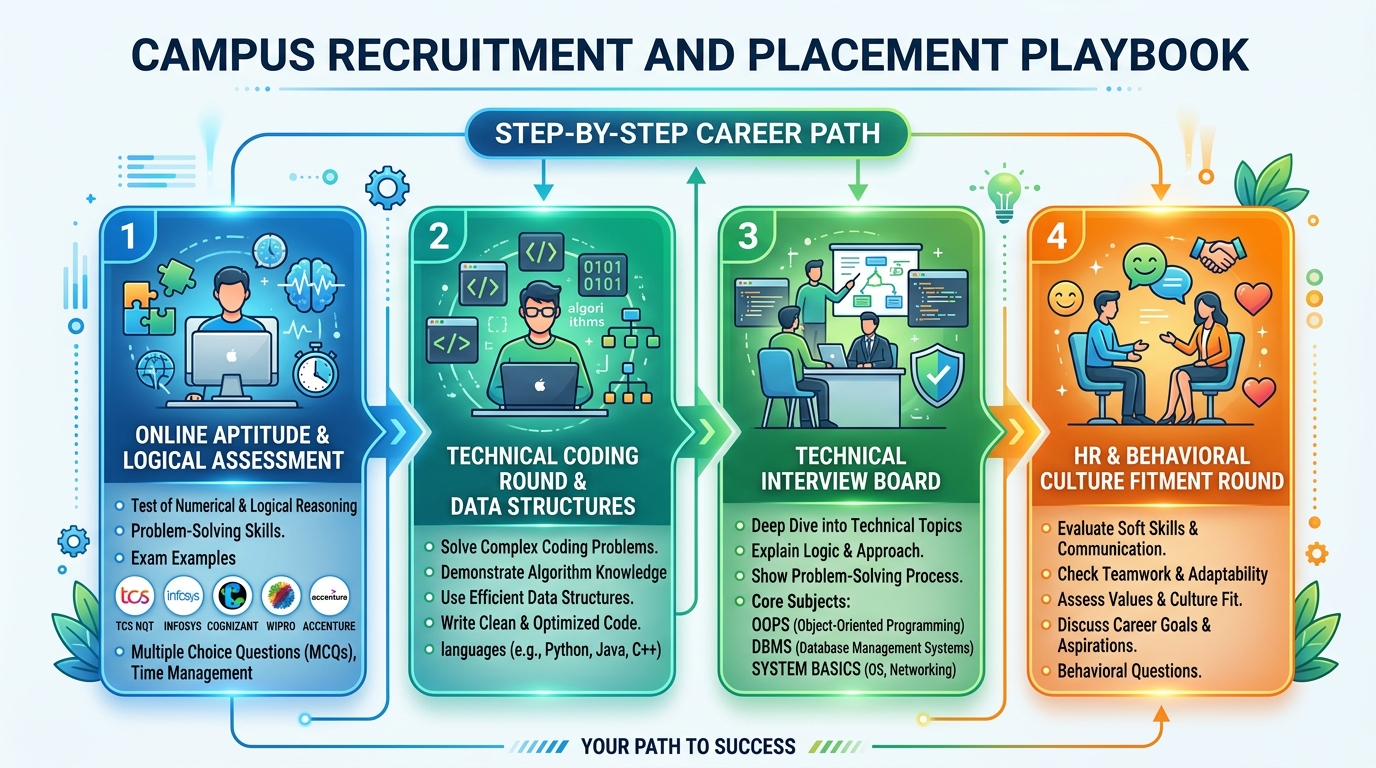
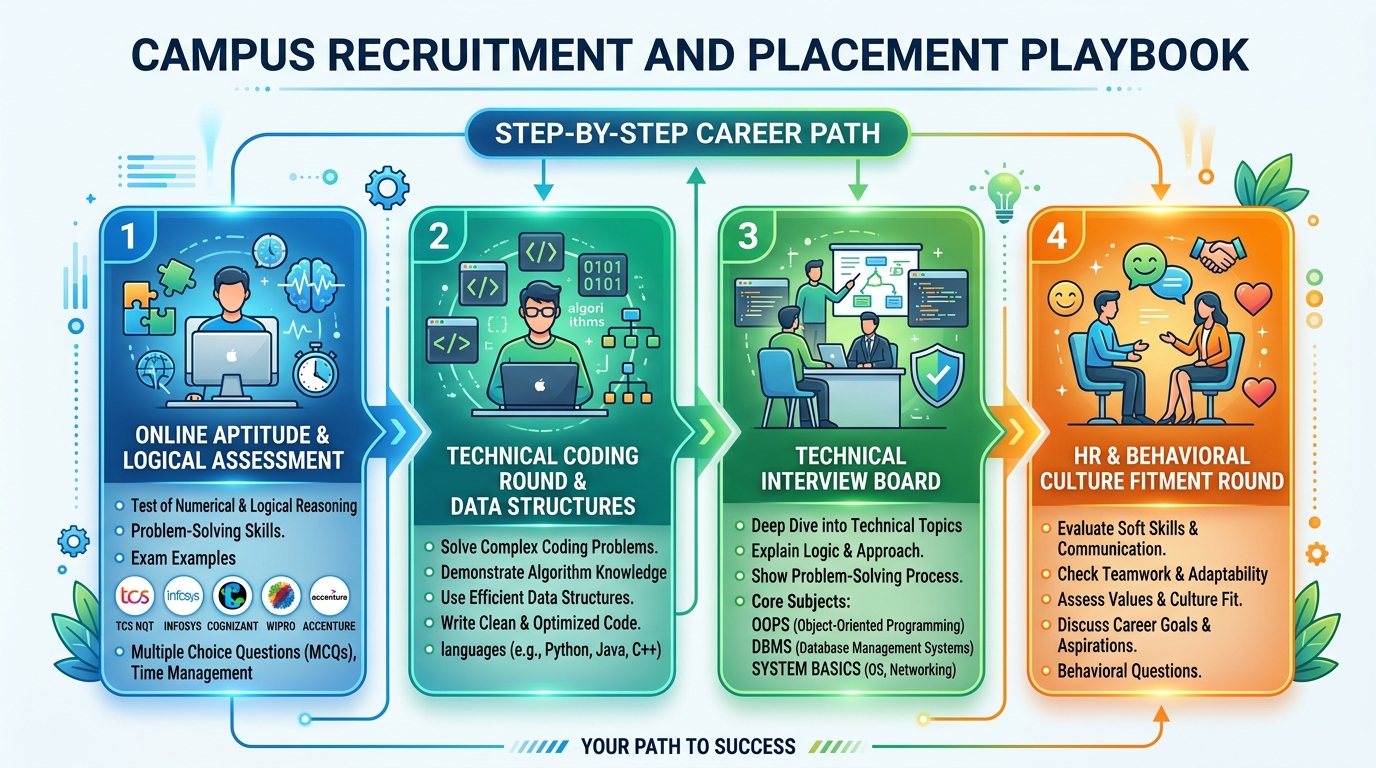
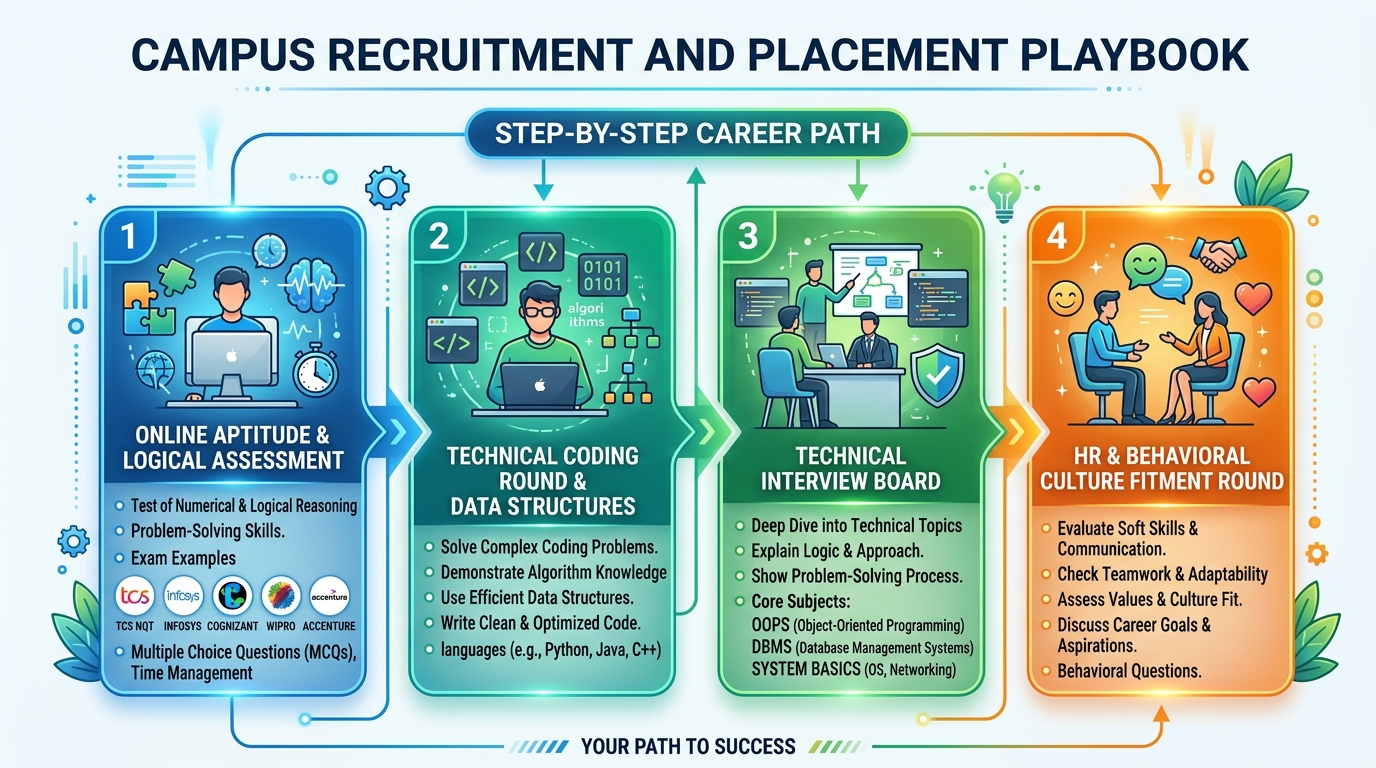
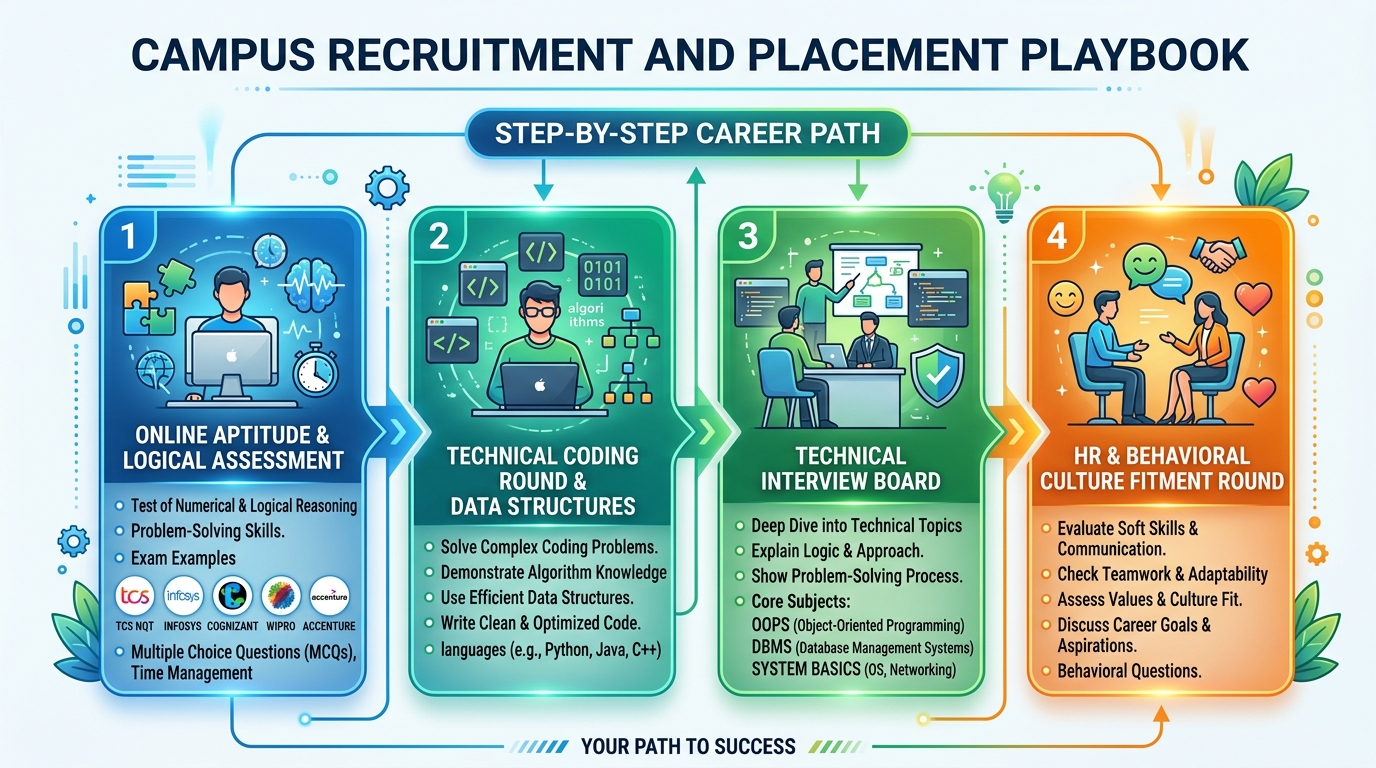
Campus recruitment drives represent the single highest-leverage opportunity for college students to transition from academia into professional corporate careers. Over 1.5 million engineering graduates enter the job market each year, creating an intensely competitive funnel where 70% of applicants are eliminated in the initial online aptitude and coding round. This comprehensive masterclass provides a structured 12-month timeline, breaks down the dichotomy between product-based and mass-recruiter service companies, details online assessment hacks, and equips freshers to excel in technical and HR interviews.

The 4-Stage Campus Recruitment Funnel: Online Assessment (OA) -> Technical Round 1 -> Technical Round 2 -> HR / Cultural Fit.
Product-Based (Tier 1) vs Service-Based (Mass Recruiter) Tracks: Contrasting preparation strategies, syllabus priorities, and evaluation rubrics.
Placement Aptitude Preparation: Complete Quantitative, Logical & Verbal Reasoning Guide
#25Campus Placement & Freshers
26 min read
placement aptitude preparation

Placement Aptitude Preparation: Complete Quantitative, Logical & Verbal Reasoning Guide

Aptitude tests are the single most ruthless screening mechanism in Indian campus recruitment, eliminating between 60% and 80% of all applicants before their resumes or coding abilities are ever reviewed. Standard college curricula do not teach time-pressured mental math or rapid logical deduction. Solving 30 complex aptitude questions in 30 minutes requires abandoning school-level algebraic derivations in favor of mental approximations, unit digit checks, LCM work-efficiency models, and option elimination heuristics. This masterclass details the high-frequency quantitative, logical, and verbal topics asked across major assessment platforms.

The 3 Pillars of Placement Aptitude: Quantitative Ability, Logical & Analytical Reasoning, and Verbal English.
Speed Math Engine: Fraction-to-percentage conversions, Vedic squaring shortcuts, digital sum verification, and divisibility rules.
How to Explain Final Year Project in Interview: Complete Framework for Freshers
#26Campus Placement & Freshers
25 min read
how to explain project in interview

How to Explain Final Year Project in Interview: Complete Framework for Freshers

In campus placement and fresher technical interviews, your final year or capstone project is the centerpiece of the entire conversation. It is the only tangible evidence an interviewer has to evaluate whether you can build real software, debug production errors, collaborate in a team, and defend architectural trade-offs. Most students fail not because their project was simple, but because they explain it like an academic college seminar: reading slide titles and describing features rather than articulating technical architecture, data flows, and their specific individual contribution. This masterclass provides a battle-tested 5-phase delivery framework, tech-stack justification scripts, and strategies for handling aggressive cross-questioning.

The 5-Phase Project Explanation Blueprint: Problem Statement & Motivation -> High-Level Architecture -> My Individual Contribution -> Technical Roadblocks & Debugging -> Measurable Impact.
The 2-Minute Elevator Pitch: How to deliver a high-signal overview before the interviewer interrupts.
ATS-Friendly Resume Writing Master Guide: Templates, Keywords & Formatting
#27Resume, Job Search & Career Skills
25 min read
ATS friendly resume

ATS-Friendly Resume Writing Master Guide: Templates, Keywords & Formatting

Over 98% of Fortune 500 enterprises and 75% of high-growth technology companies utilize Applicant Tracking Systems (ATS) like Workday, Taleo, Greenhouse, and Lever to parse, index, and rank incoming job applications. The vast majority of resumes rejected before reaching a human recruiter fail not due to lack of qualifications, but due to parsing incompatibilities: multi-column graphics, text boxes, tables, unreadable headers, and absence of semantic keyword matching. This masterclass provides an exhaustive engineering guide to creating ATS-compliant resumes, mastering Google’s "XYZ" quantified bullet point formula, and structuring content to captivate both automated algorithms and human hiring managers.

How Modern ATS Software Works: Tokenization, text extraction, semantic entity parsing, and keyword relevancy scoring.
The 7 Deadly ATS Formatting Sins: Why tables, two-column layouts, graphics, text boxes, and Photoshop templates destroy parsing.
How to Prepare for Any Job Interview: Complete 7-Day Master Playbook
#28Resume, Job Search & Career Skills
26 min read
how to prepare for a job interview

How to Prepare for Any Job Interview: Complete 7-Day Master Playbook

Walking into a high-stakes job interview without structured preparation is the corporate equivalent of performing surgery blindfolded. Natural charisma and improvisational speaking can only carry a candidate so far; winning competitive job offers requires methodical reconnaissance, behavioral storytelling calibrated with metrics, psychological stress management, and tactical reverse questioning. This masterclass delivers an actionable 7-day countdown framework that transforms nervous uncertainty into grounded, unshakeable confidence across both virtual and in-person interviews.

The 7-Day Countdown Framework: Day-by-day roadmap covering intelligence gathering, role deconstruction, story structuring, mock simulations, and game-day execution.
Advanced Company Reconnaissance: How to dissect 10-K financial reports, Glassdoor sentiment, executive LinkedIn feeds, and competitor landscapes.
SSC CGL Preparation Strategy & Study Plan: Complete Tier 1 & Tier 2 Master Roadmap
#29Government & Competitive Exams
26 min read
SSC CGL preparation

SSC CGL Preparation Strategy & Study Plan: Complete Tier 1 & Tier 2 Master Roadmap

The Staff Selection Commission Combined Graduate Level (SSC CGL) examination is India's premier recruitment portal for prestigious Group B (Gazetted & Non-Gazetted) and Group C executive appointments across Central Ministries, Departments, and Subordinate Offices. Following the landmark examination pattern overhaul, Tier 1 is strictly a qualifying screening filter, while final merit ranking is decided exclusively by the 390-mark Tier 2 examination, supported by qualifying Computer Knowledge and Data Entry Speed Tests (DEST). This masterclass details a structured 6-month study roadmap, sectional scoring tactics, previous-year question (PYQ) dissection, and post-preference selection frameworks.

The Revised SSC CGL Examination Architecture: Tier 1 qualifying dynamics and the Tier 2 (390 Marks) final merit calculation.
Tier 2 Mathematical Abilities & Reasoning: Advanced arithmetic, Geometry, Trigonometry, Coordinate Geometry, and Critical Reasoning.
UPSC Civil Services Preparation Strategy: Complete 1-Year Prelims & Mains Roadmap
#30Government & Competitive Exams
28 min read
UPSC preparation strategy

UPSC Civil Services Preparation Strategy: Complete 1-Year Prelims & Mains Roadmap

The Union Public Service Commission Civil Services Examination (UPSC CSE) is widely regarded as one of the most intellectually rigorous and competitive examinations in the world. Over 1,000,000 aspirants register annually for approximately 1,000 vacancies across the Indian Administrative Service (IAS), Indian Police Service (IPS), Indian Foreign Service (IFS), and Central Group A services. Success requires far more than passive reading; it demands an integrated Prelims-cum-Mains mental framework, multi-dimensional analytical synthesis, rapid 3-hour handwritten essay and answer composition, and ethical leadership under pressure. This masterclass provides a disciplined 12-month preparation roadmap, structured answer-writing templates, NCERT booklists, and interview board psychological preparation.

The 3-Tier UPSC Examination Architecture: Prelims screening, the 1750-mark 9-paper Mains written gauntlet, and the 275-mark Personality Test (2025 Marks Total).
The 12-Month Phased Study Plan: Transitioning smoothly from foundational NCERTs to Mains answer writing, Optional mastery, and Prelims test series.