How to Explain Final Year Project in Interview: Complete Framework for Freshers
What You'll Learn in This Masterclass
Quick Reference Matrix
| Explanation Phase | Target Duration | Core Focus & Deliverables | Critical Blunder to Avoid |
|---|---|---|---|
| 1. Hook & Real-World Problem | 25 - 30 Seconds | Real-world business/human pain point; why existing tools fail | Reciting academic textbook theory or buzzword soup |
| 2. High-Level Architecture & Tech Stack | 30 - 45 Seconds | Data flow from client to server to database; APIs & models | Listing 15 technologies without explaining their connectivity |
| 3. My Specific Individual Contribution | 45 - 60 Seconds | The exact modules YOU designed, coded, and tested with "I" statements | Using "We built this" exclusively, obscuring your actual role |
| 4. Technical Challenge & Deep Debugging | 30 - 45 Seconds | A real performance bug, concurrency clash, or integration hurdle | Claiming "Everything went smoothly with zero technical bugs" |
| 5. Measurable Impact & Future Scope | 20 - 30 Seconds | Latency reduction, test coverage, accuracy %, live URL demo | Ending abruptly without tying the project to tangible results |
Phased Execution Roadmap
Step 1: Project Audit & Architectural Mapping
Dissect every layer of your project repository; eliminate technical blind spots.
Step 2: Scripting the 5-Phase Delivery Framework
Draft and rehearse your narrative script using concise, production-grade terminology.
Step 3: Anticipating Technical Cross-Questioning
Simulate aggressive interviewer grilling on scalability, security, and edge cases.
Step 4: Peer Mock Defense & Delivery Polishing
Conduct peer cross-questioning sessions to eradicate hesitation and refine whiteboard sketching.
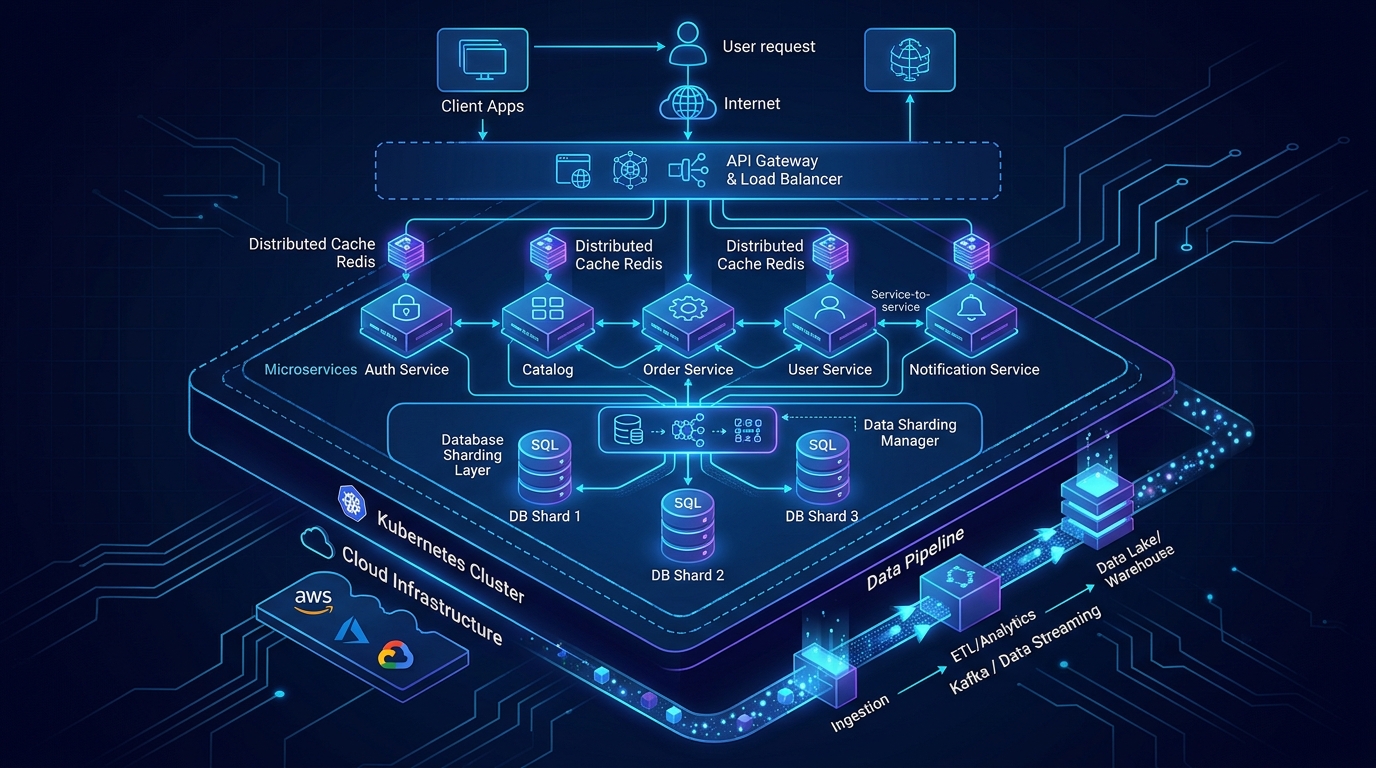
Visual Architecture & Process Diagrams
The proven narrative structure to defend any engineering capstone or software project in technical interviews.
The 5-Phase Project Explanation Blueprint: In-Depth Scripting
When the interviewer says: "Tell me about your final year project", do not ask: "Should I start from the beginning?"
Immediately deliver your polished, structured 90-second response using this 5-phase blueprint:
1. Phase 1: The Hook & Real-World Problem (25 Seconds)
State the business or human problem your project addresses before naming any software tools.
- Sample Script: "In Indian hospitals, patient diagnostic records are scattered across fragmented physical paper files and isolated local software, leading to duplicate testing and medical history errors. For our final year project, we built HealthSync—a secure, HIPAA-compliant electronic health record aggregator that enables real-time, encrypted medical record sharing between hospitals using QR-authenticated consent."
2. Phase 2: High-Level Architecture & Tech Stack (35 Seconds)
Describe the data flow from user interaction to persistent storage.
- Sample Script: "Architecturally, the application follows a 3-tier decoupled structure. The frontend is built with React and Tailwind CSS for responsive mobile ergonomics. The backend is a RESTful microservice built with Node.js and Express, with JSON Web Tokens (JWT) and RBAC for hospital role authentication. We used PostgreSQL for transactional patient data with relational integrity, and AWS S3 buckets to store encrypted PDF laboratory reports."
3. Phase 3: My Specific Individual Contribution (45 Seconds)
This is where 90% of students fail. Shift decisively from "We" to "I".
- Sample Script: "While it was a 4-person team, I personally owned the backend API architecture and database design. Specifically, I designed the normalized PostgreSQL schema with 9 tables, implemented the cryptographic AES-256 file encryption pipeline before files touch S3, and built the asynchronous notification worker using BullMQ and Redis to alert patients when their lab reports are ready."
4. Phase 4: Technical Roadblocks & Deep Debugging (35 Seconds)
Prove that you actually wrote the code by sharing a painful technical bug you diagnosed and solved.
- Sample Script: "A major bottleneck we encountered occurred when querying patient audit histories across multiple clinic visits. Our initial queries took over 2.4 seconds because of full table scans on an unindexed timestamp column. I used the PostgreSQL `EXPLAIN ANALYZE` command, diagnosed the missing index, and created a composite B-tree index on `(patient_id, created_at)`. This immediately reduced query execution latency from 2.4 seconds to under 45 milliseconds."
5. Phase 5: Measurable Impact & Future Scope (20 Seconds)
- Sample Script: "We deployed the application live on Render and Vercel, tested it with 1,500 synthetic patient records, and achieved sub-100ms API response times. If I had another 3 months, I would Dockerize the entire service into Kubernetes pods and integrate an automated CI/CD pipeline using GitHub Actions."
Defending Tech Stack Decisions: The "Why" Questions
Interviewers love asking: "Why did you use MongoDB instead of SQL?" or "Why did you choose React over plain HTML/CSS?"
If your answer is "Because my friend knew it" or "Because my college professor told us to", you fail the architectural evaluation. Every technical choice must be justified with technical trade-offs.
1. MongoDB (NoSQL) vs PostgreSQL (Relational SQL):
- If you chose PostgreSQL: "We chose PostgreSQL because our data schema—patients, doctors, appointments, and billing invoices—is inherently relational with strict foreign key constraints. We required ACID transaction guarantees to ensure that an appointment booking and payment deduction always commit atomically or roll back together."
- If you chose MongoDB: "We chose MongoDB because our data consisted of polymorphic, unstructured IoT sensor telemetry streams where document structures vary between sensor manufacturers. MongoDB's flexible JSON document model allowed us to ingest diverse schema payloads without executing heavy table migration scripts."
2. Node.js (Express) vs Python (Django/FastAPI):
- If you chose Python / FastAPI: "We chose FastAPI because our application integrated machine learning inference models, and Python’s native scientific ecosystem (NumPy, Scikit-learn) eliminated cross-process serialization overhead. Furthermore, FastAPI provides asynchronous non-blocking event loops and automated Swagger OpenAPI documentation out of the box."
- If you chose Node.js: "We chose Node.js because of its asynchronous, event-driven I/O model, which is exceptionally efficient for high-concurrency I/O-bound operations like real-time chat and document uploads without spawning heavy OS threads."
Surviving Aggressive Technical Cross-Questioning
Once you finish your initial project pitch, the technical interviewer will probe for weaknesses to verify that you didn't purchase the project or copy-paste it from GitHub.
1. The Concurrency & Scalability Trap:
- Interviewer Question: "What happens if 5,000 users try to book an appointment at the exact same second?"
- Winning Answer: "In our current prototype, that would cause database connection pool exhaustion and race conditions where two users might book the exact same slot. To scale this for production, I would implement two architectural enhancements: 1) Place a Redis distributed lock (`Redlock`) on the appointment slot ID so only one request can hold the reservation for 5 minutes; and 2) Put incoming booking requests into an asynchronous message queue (RabbitMQ or Kafka) to level the traffic spike and process bookings sequentially."
2. The Security & Authentication Trap:
- Interviewer Question: "How did you store user passwords in your database?"
- Winning Answer: "We never store plain text passwords. We use `bcrypt` with a salt round factor of 10 to hash passwords before database persistence. Bcrypt uses a slow, computationally intensive hashing algorithm designed to resist brute-force dictionary and rainbow table attacks."
3. The "What Did You Personally Struggle With?" Question:
- Never say "Nothing, it was easy." Share an authentic technical struggle: "I struggled with understanding CORS (Cross-Origin Resource Sharing) headers when our React frontend tried calling our backend API on a different port. I initially tried using wildcards (`
), but realized that destroyed authentication cookies. I spent two days reading MDN documentation and properly configuredAccess-Control-Allow-Credentials` with specific origin whitelisting."*
Handling Group Projects & The "Slacking Teammate" Question
College projects are almost always executed in teams of 3 to 4 students. Interviewers frequently use this to evaluate team leadership, empathy, and conflict resolution.
1. The Inevitable HR Behavioral Question:
- Interviewer Question: "What did you do when one of your group members didn't do any work or failed to submit their module?"
- The Wrong Answer: "He was lazy and didn't care, so I reported him to the professor and wrote his whole code myself." (Flags you as toxic and poor at conflict resolution).
- The Winning Answer (Empathy + Pragmatism):
- "Two weeks before our mid-term project evaluation, our teammate responsible for the frontend notification interface was struggling to integrate the WebSocket listeners because he was unfamiliar with asynchronous JavaScript. Rather than criticizing him or complaining to our faculty advisor, I scheduled a 2-hour pair-programming session. I walked him through how promises and event listeners work, and we pair-coded the first two notification components together. Once he understood the pattern, he gained confidence and successfully delivered the remaining three components ahead of the final deadline. That experience taught me that team bottlenecks are usually caused by a lack of clarity or skills rather than malicious intent."
2. Group Presentation Etiquette:
- In group placement interviews or panels, always acknowledge your peers respectfully: "My teammate [Name] built the authentication service, which provided the secure foundation for the database queries I optimized." This demonstrates executive maturity.
High-Frequency Interview Questions & Frameworks
Why did you choose MongoDB over PostgreSQL for your project, and how did you ensure data integrity without relational foreign keys?
What was the single most difficult technical bug or roadblock you encountered in your project, and how did you resolve it?
--inspect flag and captured heap memory snapshots using Chrome DevTools. By comparing heap snapshots across a 10-minute interval, I discovered that our Socket.io event listeners were being registered repeatedly inside an API route handler without being cleared, causing thousands of orphan closure references to stay pinned in V8 heap memory without being garbage collected. I refactored the socket management into a centralized singleton class with explicit connection teardown listeners on client disconnect. This permanently resolved the leak, keeping server memory consumption steady at under 80 MB even under 500 concurrent connections.If 100,000 active users logged into your application tomorrow, what is the very first component in your system that would break, and how would you fix it?
Costly Mistakes to Avoid
- ✕Explaining the project like an academic college lecture with slide bullet points.
Correction: Explain your project like a software engineer: focus on problem motivation, data architecture, trade-offs, individual contribution, and debugging hurdles.
- ✕Using "We did everything" and failing to specify what YOU individually wrote.
Correction: Clearly state your personal responsibilities: "I owned the backend REST APIs, authentication security, and database query optimization."
- ✕Claiming to have used advanced AI or Blockchain when it was just an external wrapper library.
Correction: Be transparent about third-party integrations. If you used an OpenAI API or pre-trained HuggingFace model, explain your prompt orchestration and data ingestion pipelines rather than pretending you trained a foundation model from scratch.
- ✕Not having the code available or not knowing what is inside your own GitHub repository.
Correction: Audit every file in your repository before the interview. If an interviewer opens your GitHub repository and asks about a specific file, you must know what it does.
Key Takeaways
- •Your project is the primary proof of your software engineering capabilities: treat it as a professional product, not an academic assignment.
- •Shift decisively from "We" to "I": interviewers need to evaluate your individual coding and architectural contributions.
- •Authentic technical struggles and debugging persistence impress senior engineering interviewers far more than claims of flawless code.
Final Interview Checklist
- 2-Minute elevator pitch scripted and rehearsed (Problem -> Architecture -> My Role -> Bug -> Impact).
- High-level architecture diagram ready to be sketched on paper or whiteboard in under 90 seconds.
- Individual contribution clearly defined with specific modules, APIs, or database schemas.
- Technical justification prepared for primary tech stack choices (e.g., SQL vs NoSQL, React vs Vue).
- One authentic, complex debugging story prepared with root-cause analysis and profiling tools.
- Scalability defense ready: Explaining what would break under 10,000 users and how to scale with caching.
- Public GitHub repository cleaned up with a comprehensive README, setup instructions, and architecture diagram.
- Live production deployment verified and bookmarked on mobile and laptop browsers.
Frequently Asked Questions (FAQs)
What should I do if my final year project is a group project and I did not write all the code?
Be completely honest about the group division. Explicitly state which modules you designed, coded, and tested, while demonstrating a high-level architectural understanding of how your teammates’ modules interface with your code. Interviewers respect honest specialization.
Is it acceptable to talk about an internship project or personal side project instead of my college capstone?
Yes! In fact, interviewers often prefer production internship projects or deployed personal side projects over generic academic assignments because they demonstrate personal initiative, modern tech stacks, and real user impact. You can say: "Along with my college capstone, I built a personal project that solves..."
What if an interviewer asks about a feature that my project does not have?
Never pretend it exists. Concede gracefully and pivot to architectural design: "That feature is not implemented in our current prototype, but if I were to design it, I would architect it by adding an event listener that triggers a background worker..." This demonstrates constructive system thinking.
How should I explain a Machine Learning or AI final year project?
Focus on the complete data lifecycle: 1) Dataset collection, cleaning, and train/test splitting; 2) Feature engineering and handling class imbalances (SMOTE); 3) Baseline vs chosen model architecture; 4) Evaluation metrics beyond accuracy (Precision, Recall, F1-Score, ROC-AUC); and 5) Model serving and inference latency via FastAPI/Flask.
Can I show my live project on my laptop or phone during an in-person interview?
Yes! Always ask politely: "Sir, I have the application deployed live on my laptop. Would you like a 60-second walkthrough of the architecture and live user flow?" In 90% of cases, interviewers welcome seeing real, working software.
What is the biggest red flag interviewers look for during project explanations?
The biggest red flag is a candidate who cannot explain basic functions or database queries from their own repository, which immediately signals that the project was purchased from an external coaching vendor or copied entirely without understanding.
How many projects should I feature on a fresher resume?
Feature 2 to 3 high-quality projects on a fresher resume: your Capstone / Final Year project, a significant personal development project, or an internship project. Having 2 deep, well-architected projects with live URLs beats having 6 trivial calculator or to-do list apps.
How do I explain an IoT or Hardware-Embedded engineering project?
Bridge the hardware and software layers: explain the sensor data acquisition (ADC sampling rates), the microcontroller/processor (ESP32, STM32, Arduino), the communication protocol (MQTT, I2C, SPI), and the cloud/web telemetry dashboard where data is visualized and analyzed.